What Are Gas Fees and Why Are They So Cheap on Solana?
Gas fees are the cost of processing transactions on a blockchain. Some networks charge dollars or more per transaction, while others charge fractions of a cent. The difference comes down to how each blockchain is designed, and why Solana makes everyday crypto spending fast and cheap.
Key Takeaways
- Gas fees are the cost of processing transactions on blockchain networks, paid to validators who secure and record your transaction.
- Fee differences come down to network architecture, and higher fees do not mean better security or faster settlement.
- KAST’s Card uses Solana for deposits, so top-ups usually confirm quickly and fees are typically low
Have you ever tried to send $50 in crypto, only to discover the network wants $30 just to process it?
Those are gas fees.
And if you've been there, you know the frustration. You're not trying to move millions. You just want to pay for something, top up your card, or send money to a friend.
But depending on which blockchain you're using, that simple transaction can cost you more than it should.
The good news? It really doesn't have to be this way.
Gas fees aren't some unavoidable cost of using crypto. They vary wildly depending on the network you choose. Some charge $50 or more. Others, like Solana, charge a fraction of a cent.
Gas fees are the costs paid to process transactions on a blockchain. In this guide, you’ll learn what gas fees are, why they vary so much across networks like Ethereum and Solana, and how KAST Card keeps everyday crypto spending cheap.
What Are Gas Fees in Crypto?
Every time you send crypto, someone has to process that transaction.
You're asking the network to check that you actually have the money, record the transaction permanently, and make sure everything is legitimate.
That work is done by validators. They run computers that secure the network and process your transaction.
Gas fees are how you pay them.
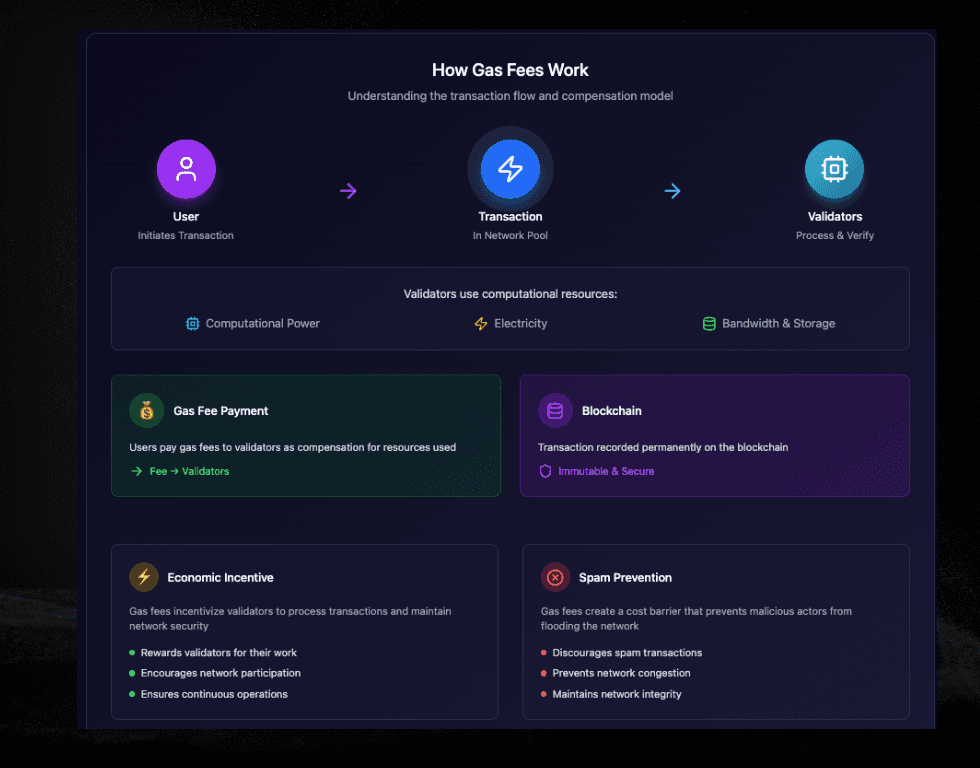
Think of it this way: you want your transaction included in the next block. Validators do the work to make that happen. Gas fees are their payment.
Why Gas Fees Vary So Much Across Blockchains
Not all blockchains are built the same.
Some were designed 10 years ago when the technology was new. Others were built recently with all the lessons learned from older networks.
And yes, you feel that difference directly in your wallet.
Here's what makes fees high or low:
1. Consensus Mechanism: Proof-of-Work vs Proof-of-Stake
This is how a blockchain decides which transactions are valid.
Proof-of-Work is the old way. Bitcoin and early Ethereum used it.
Here's how it works: miners compete to solve complex math puzzles. The first one to solve the puzzle gets to add the next block of transactions. But solving these puzzles requires massive amounts of electricity and expensive hardware.
Bitcoin blocks take about 10 minutes to create. Ethereum was a bit faster but still slow compared to modern networks.
And when lots of people want to transact at the same time, fees climb fast. During busy periods on Ethereum, people have paid $50, $100, even $200 for a single transaction.
Paying $100 just to send $50 makes no sense for everyday use.
Proof-of-Stake is the modern way. Solana, current Ethereum, and other newer networks use it.
Instead of solving puzzles, validators lock up their own money as collateral. If they validate transactions honestly, they earn rewards. If they cheat, they lose their collateral.
This uses way less energy. It's faster. And it keeps fees low even when the network is busy.
2. Network Architecture and Throughput
Some blockchains can only handle a few transactions per second.
Others can handle thousands or even tens of thousands.
When more people want to transact than the network can handle, you get a traffic jam. And just like rush hour, people start competing. They offer to pay higher fees to get their transaction through faster.
This is why Ethereum fees spike during NFT drops or when the market is going crazy. Everyone is trying to transact at once, and there's not enough space.
Solana, on the other hand, can theoretically process over 65,000 transactions per second.
With that much capacity, traffic jams are rare. And when there's no congestion, fees stay low.
3. Block Space and Priority Fees
Every block has limited space for transactions.
When that space fills up, validators start picking the transactions that pay the highest fees. It becomes a bidding war.
On networks with small blocks or slow block times, this happens constantly.
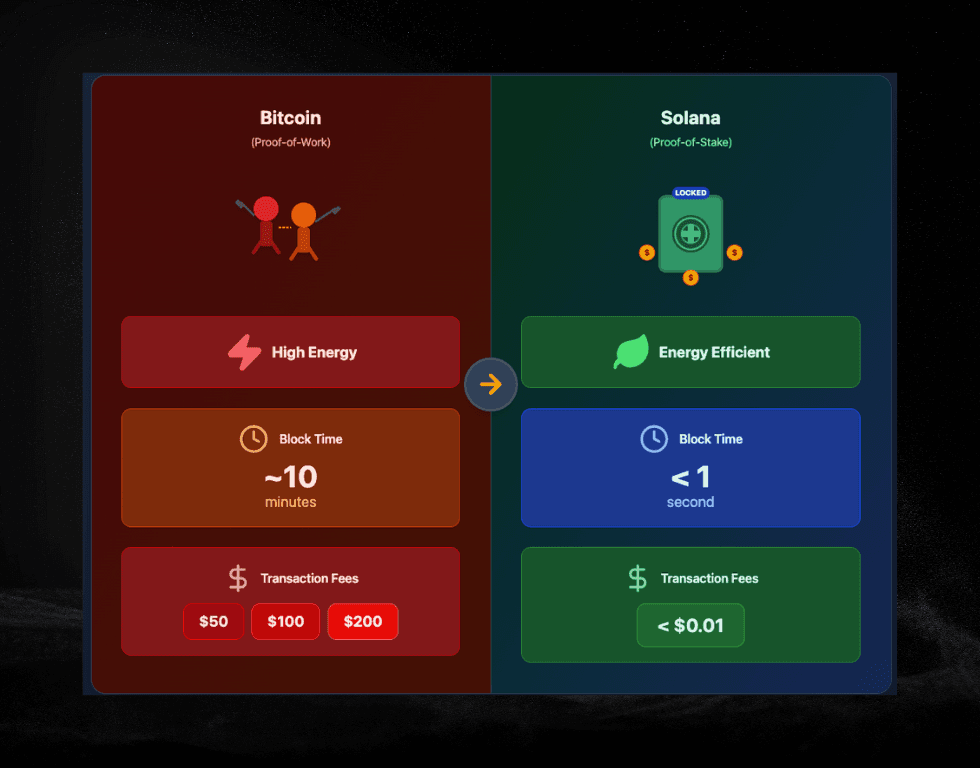
On Solana, blocks are created every 400 milliseconds. That's less than half a second. And each block can hold way more transactions.
So you rarely have to compete with anyone for space. You just send your transaction, pay the tiny base fee, and it goes through.
Simple.
Transaction Fee Comparison: Real Numbers
Gas fees vary dramatically depending on the blockchain. Here’s how Ethereum, Solana, and other networks compare in real-world usage.
*Tron offers a daily "bandwidth" allowance that can make small transactions free.
That gap is hard to ignore.
On Solana, you pay less than one-tenth of a cent. On Ethereum during busy times, you could pay $50 or more for the exact same type of transaction.
Here's another way to think about it:
💡 What $20 in Gas Fees Buys You on Different Networks
On Ethereum during peak times, $20 buys you one transaction.
On Solana, that same $20 buys you more than 20,000 transactions. That's enough for 50 years of daily spending.
So why is Solana so cheap while Ethereum is so expensive?
Why Solana Has Such Low Gas Fees
Solana was built from scratch with one goal: be fast and efficient.
Here's how they did it:
High throughput. Solana can process over 65,000 transactions per second. That means congestion almost never happens. No congestion means no bidding wars for block space.
Fast blocks. Solana has a 400ms slot time, providing a window for a new block to be created and confirmed almost instantly.
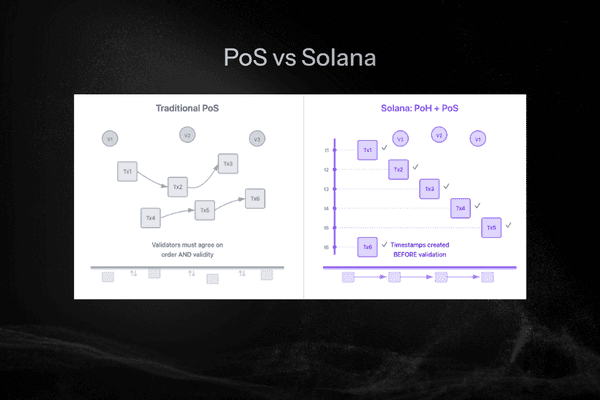
Efficient consensus. Solana uses Proof-of-Stake combined with something called Proof-of-History. Basically, it timestamps transactions before they're validated, which makes the whole process faster and more efficient.
Low validator costs. Because the system is efficient, validators don't need to charge high fees to stay profitable. They can charge fractions of a cent and still make money.
The result? Fees consistently stay below $0.001, even when the network is busy.
You send a transaction. It costs you less than a penny. It confirms in under a second. Done.
How KAST Card Uses Solana to Eliminate Fee Friction
This is where it gets practical for you.
KAST Card lets you spend your crypto like a regular card, so you can use your funds for everyday purchases.
KAST Card is built on Solana for one reason: your everyday spending shouldn't cost you extra.
When you use your KAST Card, every transaction happens on Solana in the background.
What does that mean for you?
Fees you won't notice. You're not losing $5, $10, or $50 every time you move money. You're paying fractions of a cent.
Instant updates. Solana confirms transactions in under a second, so your balance updates immediately. No waiting around wondering if it went through.
Less congestion issues. Even during busy periods, Solana handles traffic smoothly. You won't suddenly see your fees spike because everyone else is using the network at the same time.
Whether you're topping up your card, sending money to someone, or buying something at a store, Solana makes sure it's fast, cheap, and reliable.
You don't have to think about it. It just works.
Stablecoins on Solana
KAST supports USDC and USDT on Solana.
That means you get the stability of dollar-pegged assets with the speed and low cost of Solana.
When you deposit stablecoins or spend with your KAST Card, those transactions run on Solana. Fees are basically invisible.
You get the best of both worlds: stable value and efficient transactions.
When Are High Crypto Gas Fees Worth Paying?
Let me be fair here.
High-fee networks aren't always the wrong choice.
If you're moving $100,000, a $20 gas fee on Ethereum is nothing. You care more about security and liquidity than saving a few bucks on fees.
Bitcoin's high fees and slow confirmations are the price you pay for having the most secure and decentralized network in the world.
But for everyday spending? Buying coffee. Sending $50 to a friend. Topping up your card.
High fees are a dealbreaker.
You're not moving life savings. You just want to spend money without watching half of it disappear in fees.
That's where Solana shines. And that's why KAST uses it.
The Bottom Line
Gas fees are a direct result of how a blockchain is designed.
Older networks charge more because they're inefficient. Newer networks like Solana charge less because they were built for scale.
With the KAST Card, you get:
- Instant transactions
- Fees under a tenth of a cent
- No congestion, no surprises
You shouldn't have to think about gas fees when you're spending your own money.
With KAST, you don't have to.
Ready to spend without losing money to fees?
Get your KAST Card today and see what crypto payments should actually feel like.
Disclaimer: This content is provided by KAST Academy for educational purposes only and is not intended as financial advice or a recommendation to engage in any transaction. All information is provided "as-is" and does not account for your individual financial circumstances. Digital assets involve significant risk; the value of your investments may fluctuate, and you may lose your principal. Some products mentioned may be restricted in your jurisdiction. By continuing to read, you agree that KAST group, KAST Academy, its directors, officers and employees are not liable for any investment decisions or losses resulting from the use of this information.
Related articles
How to Read a Block Explorer: Tracking Your Card Top-Ups
Ever sent crypto and wondered if it actually went through? This guide shows you how to use a block explorer to track your transaction in real time, understand confirmations, and see exactly when your KAST card top-up is ready to spend.
Blockchain Confirmations Guide: ‘Instant’ Payments Aren't Always Final
Crypto payments feel instant, but finality takes time. Here’s what really happens after you hit send, why confirmations matter, and how KAST removes that friction from everyday spending.
Why Settlement Time Matters for Your Card Balance
Ever notice your card balance update hours or days after you’ve already paid? That delay is settlement time. This guide explains how card transactions really work, why balances don’t change instantly, and how on-chain settlement with KAST helps your balance update faster and more transparently.