How to Identify and Avoid Common Crypto and Payment Scams
Crypto scams are becoming more sophisticated as cryptocurrency adoption grows. This guide explains the most common cryptocurrency scams, how they work, and the warning signs to watch for so you can protect your assets.
Key Takeaways
- Crypto scams are increasing as scammers use new technologies and social engineering to target users.
- Recognizing common warning signs like guaranteed profits, urgent payment requests, and fake websites can help you avoid scams.
- If you’re targeted, act quickly by securing your accounts, reporting the scam, and contacting the relevant platform.
Crypto scams are getting smarter and more common. In fact, investors lost about $1.37 billion to cryptocurrency scams in 2025 alone, a 64% increase from the previous year, according to a report from blockchain security firm PeckShield.
From fake investment opportunities to impersonation attacks and phishing messages, today’s crypto scams often rely on social engineering rather than technical hacks.
The good news? Once you know what to look for, many cryptocurrency scams and crypto fraud schemes become much easier to spot. In this guide, you’ll learn how to recognize the warning signs of a crypto scam, understand the most common tactics scammers use, and take simple steps to identify and avoid crypto scams before they cost you money.
What Are Crypto and Payment Scams?
Crypto scams and payment scams are schemes designed to trick people into sending money or sharing sensitive information related to their crypto wallets. In most cases, a scammer pretends to be a trusted person or company, like a crypto exchange, investment expert, or even customer support, to convince you to send funds.
Because crypto transactions move quickly and don’t rely on traditional banks, scammers often target crypto users as an easier way to commit fraud.
One key difference between crypto scams and traditional payment scams is how transactions work. With most crypto transfers, once the payment is sent, it’s recorded on the blockchain and usually can’t be reversed, which makes it harder to recover funds after a crypto scam.
Some bank transfers or card payments may be eligible for dispute or recovery in certain cases, but outcomes vary. With crypto, prevention and awareness are often your best protection.
Why Crypto Scams Are Increasing
As cryptocurrency becomes more mainstream, the number of cryptocurrency scams and crypto fraud cases has also grown. More users entering the space means more potential targets, and scammers are constantly adapting their tactics to take advantage of new technology and online behavior.
Several trends have helped drive the rise in crypto fraud and cryptocurrency scams:
- AI-Powered Scams: Tools like generative AI and deepfake technology allow scammers to create convincing fake videos, messages, and endorsements that appear to come from trusted personalities or companies.
- Organized Scam Networks: Many scams are now run by coordinated groups that specialize in different roles such as phishing campaigns, scam website development, and victim outreach.
- Permanent Transactions: Once cryptocurrency is sent and confirmed on the blockchain, it usually cannot be reversed, which makes it attractive to criminals committing crypto fraud.
- Cross-Border Nature of Crypto: Digital assets move globally, and differences in regulation across countries can make it harder for authorities to track and prosecute scammers.
- Speculation and Quick-Profit Culture: The possibility of rapid gains in crypto markets can tempt people to invest quickly without verifying opportunities, making them vulnerable to cryptocurrency scams.
- Social Engineering Tactics: Scammers often build trust through direct messages, online communities, or fake customer support accounts before persuading victims to transfer funds.
What Are the Most Common Crypto and Payment Scams?
Crypto scammers use many tactics, but most of them follow recognizable patterns. If you understand how these scams work and the warning signs, it becomes much easier to spot them before any money changes hands.
Investment Scams
Many crypto investment scams start with someone pitching you a trading opportunity, a private investment group, or an automated platform that supposedly delivers huge profits.
You might be shown screenshots or dashboards displaying impressive returns to build your trust before you're encouraged to deposit more funds. In reality, these setups are designed to keep you investing until the scammers disappear, making them one of the most common types of Bitcoin scams and crypto fraud.
Common warning signs:
- Promises of guaranteed profits or “risk-free” returns
- Pressure to invest quickly before an opportunity disappears
- Fake dashboards showing profits that cannot be withdrawn
- Requests for additional deposits to unlock funds
Phishing Scams
A crypto phishing scam often starts with an email, text, or website that looks like it’s from a legitimate crypto platform.
The message usually asks you to log in, verify your account, or fix an urgent issue. If you enter your wallet credentials, login details, or recovery phrase, scammers can use that information to access your wallet and steal your funds.
Common warning signs:
- Emails claiming your account needs urgent verification
- Fake login pages that mimic exchanges or wallets
- Suspicious links with slightly altered domain names
- Requests for private keys or seed phrases
Impersonation Scams
In impersonation scams, a crypto scammer pretends to be someone you trust, such as a customer support agent from a crypto exchange, a company representative, or a well-known crypto influencer.
They may contact you through social media, email, or messaging apps and claim there’s an urgent issue with your account or a special investment opportunity. To appear legitimate, they often copy official logos, profile pictures, and usernames that look very similar to real accounts.
Common warning signs:
- Unsolicited messages from “customer support”
- Accounts presenting themselves as public figures or crypto experts
- Requests to move conversations to private messaging apps
- Urgent instructions to send cryptocurrency or sensitive information
Giveaway Scams
Giveaway scams are a common type of bitcoin scam that often appears on social media platforms like X, YouTube, or Telegram. You might see posts or live streams claiming that a celebrity, influencer, or crypto company is running a limited-time promotion where you send cryptocurrency to a wallet address and receive a larger amount in return. In reality, once you send the funds, the scammers keep the cryptocurrency and nothing is sent back.
Common warning signs:
- Messages promising to “double your crypto”
- Social media posts promoting limited-time giveaways
- Wallet addresses posted for sending funds
- No verification from official company channels
Advance-Fee / Inheritance Scams
In this type of crypto scam, someone contacts you claiming they are entrusting you with access to a large amount of cryptocurrency. They might say they inherited funds, found an old wallet, or need help withdrawing assets from a restricted account. To make the story believable, they often send you a website link along with a username and password so you can log in and see the supposed funds yourself.
Once you log in, the account appears to contain a large crypto balance. However, when you try to withdraw the funds, the platform asks you to pay a small fee, gas charge, or “account activation” cost first. If you send the payment, the scammers simply keep the money and disappear. The account balance and platform are completely fake.
Common warning signs:
- Messages claiming someone wants to give you access to a large crypto fortune
- Login credentials provided for a wallet or exchange account
- Requests to pay a withdrawal fee, gas fee, or unlocking charge
- Websites that look like real exchanges but are not legitimate platforms
- Pressure to act quickly before the “account expires”
Pump-and-Dump Schemes
Pump-and-dump schemes happen when scammers try to convince you and other investors to buy a specific cryptocurrency by heavily promoting it on social media, online forums, or messaging groups.
The sudden attention causes more people to buy the token, which quickly pushes the price up. Once the price is high enough, the scammers sell their own holdings and exit, causing the value to crash and leaving you and other investors holding coins that have rapidly lost most of their value.
Common warning signs:
- Aggressive online promotion of tokens with little or no real utility or fundamentals
- Claims of insider knowledge or guaranteed price increases
- Sudden spikes in price and trading activity
Cloud Mining Scams
Cloud mining scams promise you easy passive income by letting you “rent” mining power from a company that claims to operate large crypto mining facilities. You might see a dashboard showing your mining earnings increasing over time, which is meant to convince you that the investment is working. In reality, the mining operation may not exist, or the profits are fabricated, while the scammers simply keep the money you deposited.
Common warning signs:
- Promises of high returns without technical knowledge
- Dashboards showing unrealistic mining profits
- Pressure to upgrade to more expensive mining plans
- No verifiable information about mining facilities
Romance or Social Media Scams
Some crypto scams rely on building trust with you over time rather than asking for money right away. A scammer might start chatting on a dating app, social media platform, or messaging app and slowly build a friendly or romantic relationship.
After gaining your trust, they eventually introduce a “great crypto investment opportunity” or claim they’re facing an urgent financial problem, then ask you to send cryptocurrency to help.
Common warning signs:
- Rapid attempts to build emotional connections online
- Refusal to meet in person or appear on video calls
- Conversations that eventually shift to investment opportunities
- Requests for cryptocurrency transfers
Fraudulent ICOs
Fraudulent initial coin offerings (ICOs) happen when scammers launch what looks like a brand-new crypto project and invite you to buy its tokens early. The project may have a professional website, a detailed whitepaper, and heavy marketing to make it appear legitimate. But once investors send cryptocurrency to participate, the team disappears and the promised product, platform, or token value never materializes.
Common warning signs:
- Vague project descriptions and unrealistic promises
- Anonymous development teams
- Aggressive marketing with little technical detail
- No working product or verifiable roadmap progress
Blackmail and Extortion Scams
Extortion scams usually start with a threatening message claiming that a hacker has accessed your computer, webcam, or personal data. The scammer tells you they will expose embarrassing information, such as private photos or browsing history, unless you send cryptocurrency. In many cases, these threats are completely fabricated, but the message is designed to scare you into paying quickly before you have time to question it.
Common warning signs:
- Emails claiming your device or webcam was hacked
- Threats to send information to your contacts
- Strict deadlines to create panic
How Can I Avoid Crypto and Payment Scams?
The good news is that most crypto scams can be avoided if you follow a few simple safety habits. Scammers often rely on urgency, confusion, or trust to trick people into sending funds. By slowing down and verifying details before taking action, you can significantly reduce your risk of crypto fraud.
Verify Platforms Before Sending Crypto
Before sending cryptocurrency, make sure you’re using a trusted exchange, wallet, or platform. Scammers often create fake websites or apps that look nearly identical to legitimate services. Checking the official website, reviews, and security details can help you avoid crypto scams that rely on fake platforms.
Never Share Private Keys or Recovery Phrases
Your private keys and recovery phrases give full access to your crypto wallet. Legitimate companies will never ask you for this information, even if they claim to be customer support. If someone asks for these details, it’s almost certainly a crypto scam.
Double-Check Wallet Addresses
Always review the wallet address carefully before confirming a transaction. Some scammers use malware or fake interfaces that replace the correct address with their own. Taking a moment to verify the address can prevent accidental transfers linked to crypto fraud.
Be Skeptical of “Too Good to Be True” Offers
Promises of guaranteed profits or unusually high returns are a common tactic in cryptocurrency scams. If someone claims you can double your money quickly or offers a “risk-free” investment, treat it as a major red flag. Legitimate investments never guarantee profits.
Avoid Clicking Suspicious Links
Scammers often send links that lead to fake login pages or phishing sites. Instead of clicking links in emails or messages, visit platforms directly through their official websites or apps. This simple habit can help you avoid crypto scams designed to steal your credentials.
Research Projects Before Investing
Before investing in a crypto project, take time to check the team, roadmap, and community behind it. Be cautious of anonymous teams, unrealistic promises, or projects with heavy marketing but little real development, these are common warning signs in crypto scams.
What Should I Do If I Already Sent Crypto to a Scammer?
If you’ve already sent cryptocurrency to a scammer, don’t panic, but act quickly. While most crypto transactions can’t be reversed, taking the right steps right away can help limit the damage and protect the rest of your funds from further crypto fraud.
1. Stop Sending Funds Immediately
If someone is asking you to send more crypto to “unlock” your funds, pay a “processing fee,” or complete a transaction, stop right away. This is a very common tactic used in crypto scams to keep victims sending more money.
2. Save All the Transaction Details
Before doing anything else, collect as much information as you can about the transaction so exchanges or investigators can understand what happened. Make sure you save the transaction ID (TXID), the wallet address you sent funds to, the amount and date of the transaction, and screenshots of any messages, emails, or websites connected to the crypto scam.
3. Contact the Platform Involved
If you used an exchange, wallet app, or trading platform, reach out to their support team immediately. Let them know you may have been targeted by a cryptocurrency scam and share the transaction details. While they usually can’t reverse the payment, they may be able to flag the scammer’s wallet or track suspicious activity.
4. Report the Scam
Reporting the scam can help stop the same scammers from targeting others. If the scam started on a platform like social media, messaging apps, or an exchange, report the account or website directly through that platform.
You can also report crypto scams and crypto fraud to local cybercrime or consumer protection authorities in your country.
5. Secure Your Wallet and Accounts
If you shared login details, private keys, or recovery phrases, take steps immediately to secure your accounts. Change your passwords right away, enable two-factor authentication (2FA), move any remaining funds to a new secure wallet if necessary, and review connected apps to revoke any suspicious permissions.
These steps can help prevent scammers from gaining further access to your funds.
6. Warn Others If You Can
If the scam happened through a public channel like social media or a messaging group, consider warning others. Posting about the scam account, fake website, or wallet address may help someone else avoid the same crypto scam.
Stay One Step Ahead of Crypto Scams
KAST is built for the boring part: the moment before you send money.
Use the same checklist above in-app too. Verify where a message is coming from, confirm the destination, and treat anyone asking for your recovery phrase as a scam by default.
If something feels off, stop. You do not need to “finish the step” to be safe.
The more you understand how crypto scams and cryptocurrency scams work, the easier it becomes to spot the warning signs before they turn into crypto fraud. A little skepticism, a quick double-check, and a healthy “this seems too good to be true” radar can go a long way.
Remember: scammers rely on urgency, excitement, and trust. If someone is pushing you to act quickly, promising guaranteed profits, or asking for private information, pause and verify before doing anything.
By staying informed and following simple safety habits, you can enjoy the benefits of crypto while keeping your funds and your peace of mind secure.
Disclaimer: This content is provided by KAST Academy for educational purposes only and is not intended as financial advice or a recommendation to engage in any transaction. All information is provided "as-is" and does not account for your individual financial circumstances. Digital assets involve significant risk; the value of your investments may fluctuate, and you may lose your principal. Some products mentioned may be restricted in your jurisdiction. By continuing to read, you agree that KAST group, KAST Academy, its directors, officers and employees are not liable for any investment decisions or losses resulting from the use of this information.
Related articles
Are Crypto Cards Safe to Use?
Crypto cards are powerful tools for spending your digital assets in the real world. Like any other card, they're safe when you follow the right security practices.
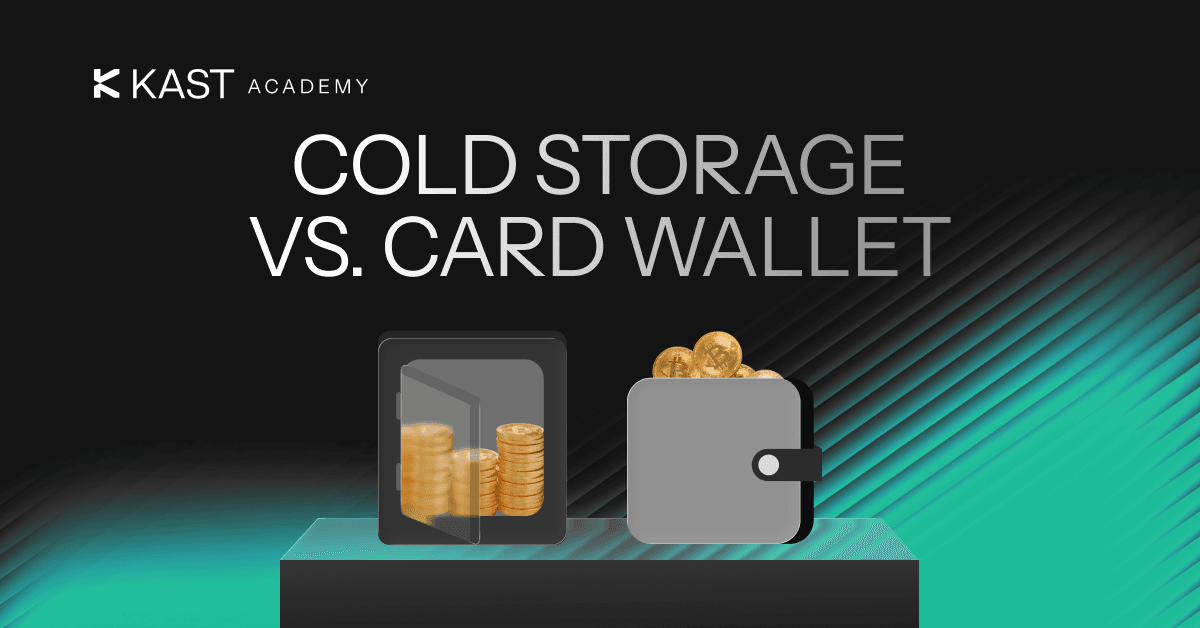
Cold Storage vs. Card Wallet: How Much Should You Keep on KAST?
Most crypto advice frames storage as a binary choice. A better approach is separating long-term holdings from a working balance. Cold storage keeps funds safe by staying out of reach, while a card wallet like KAST keeps money accessible for spending, transfers, and everyday life.

Phishing Emails Explained: How to Spot Them
Phishing scams try to pressure you into acting quickly by pretending to be a trusted company or person. This guide explains the common warning signs, how to verify suspicious messages safely, and the steps you can take to reduce the risk to your KAST account.