Crypto Wallets 101: How They Work, and How to Keep Your Funds Safe
A crypto wallet doesn’t actually store your crypto, it gives you access to it. In this guide, learn how crypto wallets work, the different types available, and how to choose the right one while keeping your funds secure.
Key Takeaways
- Your crypto lives on the blockchain, not in your wallet.
- Losing your private key or seed phrase means losing access to your crypto.
- Not all wallets work with every crypto, so compatibility matters.
A crypto wallet is the first thing you need to use crypto, but it’s also one of the most misunderstood.
It doesn’t store your funds, it controls access to them. And if you don’t understand how it works, you can lose your crypto permanently.
In this guide, you’ll learn exactly how crypto wallets work, the different types available, and how to choose one that fits how you actually use crypto.
A crypto wallet is a tool that lets you access, send, and receive cryptocurrency by managing your private keys. It doesn’t store your crypto directly. Instead, it gives you control over funds that exist on the blockchain.
What Is a Crypto Wallet?
So, what is a crypto wallet in simple terms? A crypto wallet (or cryptocurrency wallet) is a tool that lets you access, send, and receive digital assets on the blockchain.
It doesn’t actually store your crypto. Instead, it stores the cryptographic keys that prove ownership and allow you to control your funds.
Your crypto always exists on the blockchain as part of a public ledger, while your wallet holds your private key, which is used to sign transactions and authorize movement of funds. It also generates a public address that you can share to receive crypto.
From a technical standpoint, your wallet acts as an interface between you and the blockchain. It reads your balance from the network, creates transactions, and signs them using your private key before broadcasting them for validation.
How Do Crypto Wallets Work?
Alright, here’s where things get interesting. Once you understand how crypto wallets work, everything else in crypto starts to click.
Your Wallet Is an Interface to the Blockchain
Your wallet acts as an interface that lets you interact with your funds on the blockchain.
When you open your wallet, it reads your balance from the network, allows you to create transactions, and presents everything in a way that’s easy to use.
Behind the scenes, it communicates with the blockchain, but it doesn’t store any assets itself.
It All Starts With Keys
At the core of every cryptocurrency wallet are two things: a public key and a private key.
Your public key, often shown as your wallet address, is what you share with others to receive crypto. Your private key is what gives you control. It’s used to approve transactions and prove that you own the funds you’re trying to send.
Technically, the private key is just a very large random number, and the public key is generated from it using cryptographic algorithms.
This process only works in one direction. You can generate a public key from a private key, but not the other way around. That’s what keeps your funds secure.
What Happens When You Send Crypto
When you send crypto, your wallet signs a transaction with your private key and broadcasts it to the network.
Validators then verify it and include it in the blockchain once confirmed.
Types of Crypto Wallets
Not all crypto wallets are the same. In fact, there are several different types of crypto wallets, and they’re usually grouped by three main factors: connectivity, control, and structure.
1. Wallets by Connectivity
One of the most common ways to group types of crypto wallets is by how they connect to the internet. This is where the idea of hot vs cold wallets comes in. It’s a simple concept: some wallets stay online for convenience, while others stay offline for security.
Hot Wallets (Online Wallets)
Hot wallets are crypto wallets that stay connected to the internet, which makes them fast and easy to use. They’re designed for convenience, especially if you’re sending crypto regularly or interacting with apps.
You’ll usually find hot wallets in the form of:
- Mobile wallets (apps on your phone)
- Desktop wallets (installed on your computer)
- Web wallets (used through your browser)
Popular examples include MetaMask, Trust Wallet, and Coinbase Wallet. Because they’re always online, hot wallets are ideal for everyday use like payments, trading, and Decentralized Finance (DeFi).
The trade-off is that being connected to the internet makes them more exposed to potential risks, so they’re better suited for smaller, active balances.
Cold Wallets (Offline Wallets)
Cold wallets store private keys offline, which can reduce exposure to online threats like phishing and malware. They are often used for long-term storage, especially when set up and backed up carefully.
The most common types are:
- Hardware wallets (physical devices)
- Paper wallets (printed keys or QR codes)
Examples include Ledger and Trezor. Cold wallets are typically used for long-term storage or holding larger amounts of crypto. They’re not as convenient for daily use, but they provide a much higher level of protection.
2. Wallets by Control
Another important way to understand types of crypto wallets is by looking at who controls the private keys. This is a big deal in crypto, because whoever controls the keys controls the funds.
Custodial Wallets
Custodial wallets are crypto wallets where a third party holds your private keys for you. This is how most exchange wallets work. Platforms like Coinbase, Binance, and Kraken manage your wallet behind the scenes, so you don’t have to deal with keys directly. You simply log in with your account, and everything is handled for you.
This makes custodial wallets very easy to use, especially for beginners. They feel similar to traditional financial apps, and you don’t need to worry about managing your own security setup.
However, the trade-off is that you don’t have full control over your funds. Since the platform holds the keys, you’re relying on them to secure your assets and give you access when needed.
Non-Custodial Wallets
Non-custodial wallets are crypto wallets where you control your private keys. There’s no intermediary involved. Wallets like MetaMask, Trust Wallet, and Ledger give you direct ownership of your funds, meaning only you can approve transactions and move your crypto.
This setup gives you full control and independence. You’re interacting directly with the blockchain, and no one can freeze or restrict your funds. But it also means you’re fully responsible for your wallet.
If you lose access to your private key or seed phrase, you may not be able to recover your funds. Make secure backups before you store meaningful value in a non-custodial wallet.
3. Wallets by Structure (Single vs Multi-Signature)
Another way crypto wallets are grouped is by how their transactions are approved. This is called the wallet’s structure. In simple terms, it answers the question: how many approvals are needed before crypto can be sent?
Single-Signature Wallets
A single-signature wallet is the most common type of crypto wallet. It’s controlled by one private key, which means only one person needs to approve a transaction.
Most popular wallets like MetaMask and Trust Wallet fall into this category. When you send crypto, your wallet signs the transaction using your private key, and that’s enough for the network to process it.
Multi-Signature Wallets
A multi-signature wallet (multisig wallet) works differently. Instead of relying on one key, it requires multiple approvals before a transaction can go through.
For example, a wallet might be set up as “2-of-3,” meaning there are three total keys, but at least two must approve a transaction. This adds an extra layer of crypto wallet security, because no single person can move funds on their own.
Wallets like BitGo are popular multisig options, especially for teams and organizations. They’re commonly used by businesses, DAOs, and shared accounts where multiple people need to approve payments.
Click here for other exlainers regarding crypto security, wallets and crypto cards.
Which Crypto Wallet Should You Use?
With so many types of crypto wallets, the right choice depends on how you plan to use crypto. It’s all about balancing convenience, control, and crypto wallet security.
Beginners
If you’re just starting out, a custodial wallet or simple hot wallet is the easiest option. It’s quick to set up, easy to use, and lets you learn how a crypto wallet works without managing private keys.
Advanced Users
As you get more comfortable, a non-custodial wallet gives you full control over your funds. You manage your own keys and interact directly with the blockchain, but you’re also responsible for security.
Long-Term Holders
If you’re holding crypto long term, cold wallets offer the highest level of security. Since they’re offline, they’re better suited for storing larger amounts safely over time.
Common Mistakes to Avoid
Even if you understand how crypto wallets work, small mistakes can still lead to big losses. However, most of these mistakes are simple and totally avoidable once you know what to look for.
Here are the most common ones to watch out for when using a crypto wallet:
Sending Crypto to the Wrong Address
Crypto transactions are final. There’s no “undo” button. Wallet addresses are long strings of letters and numbers, and even a tiny mistake can send your funds to the wrong place. Once it’s gone, it’s usually gone for good.
Since every transaction is recorded on the blockchain and validated by the network, not a central authority, that means there’s no system in place to reverse or correct errors after confirmation. If the address you send to is valid but belongs to someone else, the funds will go through exactly as instructed.
What to do:
- Always double-check the address
- Copy and paste instead of typing
- Send a small test transaction first
Losing Your Seed Phrase
Your seed phrase is the master key to your cryptocurrency wallet. If you lose it and can’t access your wallet, there’s no way to recover your funds. On the flip side, if someone else gets it, they can take everything.
There’s no account recovery process in crypto. In most non-custodial wallets, there is no account recovery like in traditional apps. If you lose your seed phrase and don’t have a secure backup, you may permanently lose access.
What to do:
- Write it down and store it offline
- Never save it in notes, email, or screenshots
- Keep backups in secure locations
- Never send anyone your seed phrase
Falling for Scams
A lot of crypto wallet security issues come down to scams, not technology. Most attacks don’t break the wallet itself. Instead, they trick you into giving access or approving something you shouldn’t. Scammers use a range of tactics to trick users into giving up access to their funds.
This includes phishing links to fake wallet or exchange login pages, fake support agents asking for your seed phrase or private key, and malicious dApps that request permissions to drain funds.
They may also use impersonation accounts posing as influencers, projects, or companies, or promote “too good to be true” offers like giveaways or guaranteed returns to create urgency and lower your guard.
Scammers might:
- Pretend to be support teams
- Send fake links
- Ask for your private key or seed phrase
Rule of thumb:
- No legitimate service will ever ask for your seed phrase
If someone does, it’s a scam.
Using Fake Apps or Websites
Not all wallets are legit. Some fake apps and websites are designed to look exactly like real crypto wallets, but they exist to steal your information the moment you interact with them. These fake platforms often copy the branding, interface, and name of popular wallets to appear legitimate.
They may show up in search results or run as ads, making them easy to mistake for the real thing. In many cases, they use slightly altered URLs that look almost identical to official websites. Once you interact with them, they may prompt you to enter your seed phrase during setup or login, which is how attackers gain access to your funds.
What to do:
- Only download wallets from official websites or app stores
- Double-check the app name and developer
- Be cautious with links shared via email or social media
Final Thoughts
A crypto wallet is your gateway to using cryptocurrency. Once you understand what a crypto wallet is and how crypto wallets work, everything else in crypto becomes much easier to navigate.
The key is simple: control comes with responsibility. Choose the right wallet, follow basic security practices, and you’ll be in a strong position to manage your crypto safely.
Disclaimer: This content is provided by KAST Academy for educational purposes only and is not intended as financial advice or a recommendation to engage in any transaction. All information is provided "as-is" and does not account for your individual financial circumstances. Digital assets involve significant risk; the value of your investments may fluctuate, and you may lose your principal. Some products mentioned may be restricted in your jurisdiction. By continuing to read, you agree that KAST group, KAST Academy, its directors, officers and employees are not liable for any investment decisions or losses resulting from the use of this information.
Related articles
Cold Storage vs. Card Wallet: How Much Should You Keep on KAST?
Most crypto advice frames storage as a binary choice. A better approach is separating long-term holdings from a working balance. Cold storage keeps funds safe by staying out of reach, while a card wallet like KAST keeps money accessible for spending, transfers, and everyday life.
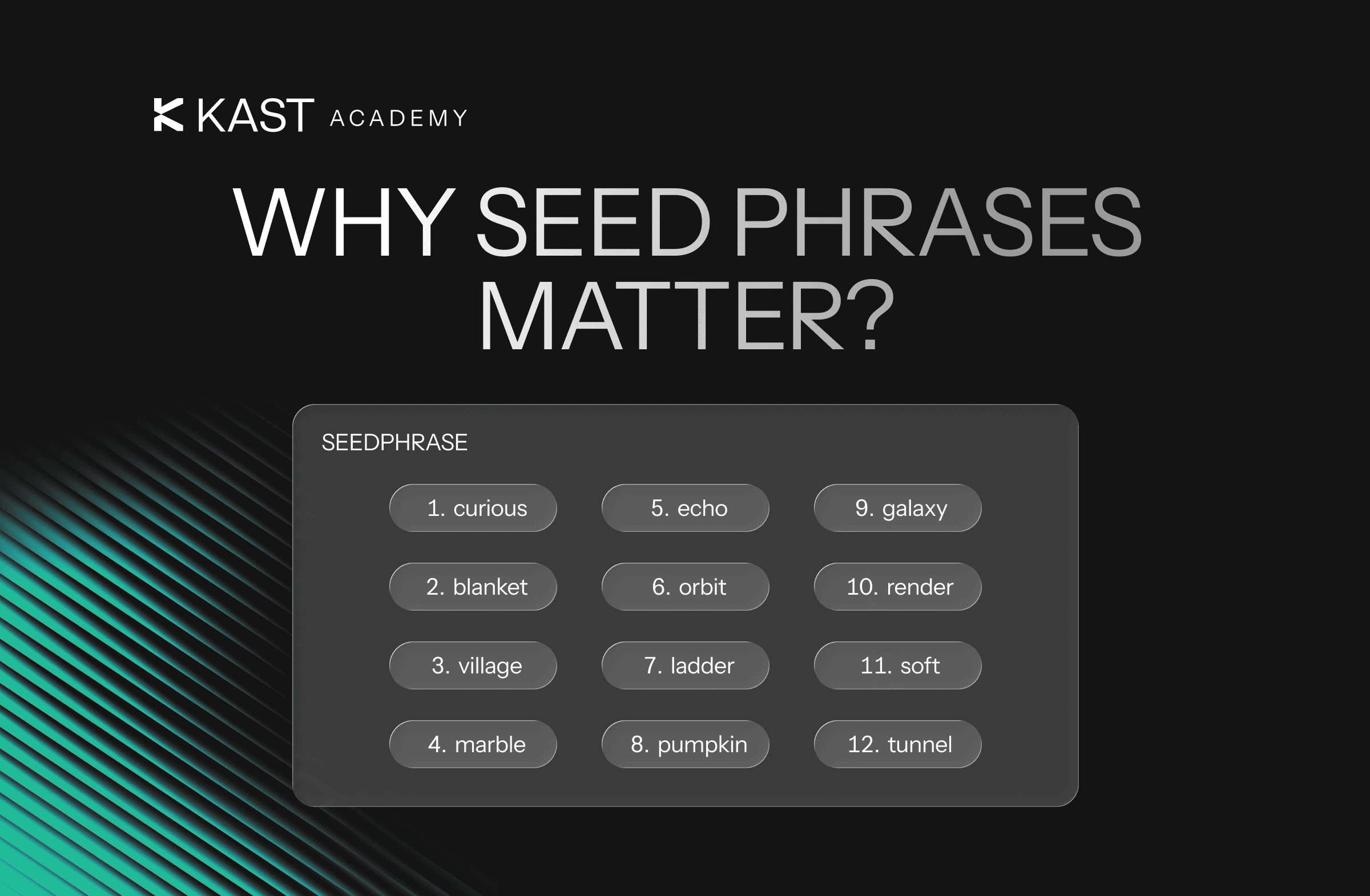
Seed Phrases Explained: Why KAST Handles the Keys for You
A seed phrase is the master backup to your crypto wallet, and losing it can mean losing access to your funds permanently. This guide explains how seed phrases work, the risks of self-custody, and why custodial models like KAST can make everyday crypto use simpler and safer.
Looking for a No-KYC Crypto Card? Here’s Why Most Legit Cards Require KYC
A no‑KYC crypto card often means you skipped verification, not that the system did. Here’s why these programs fail, and what “reliable” really requires.