How to Maximize Your KAST Membership: A Guide to the New Tier System
KAST Memberships v1.0 simplifies rewards by applying one tier across every card on your account. Instead of remembering which card does what, you choose a single annual tier that sets your cashback rate.
Key Takeaways
- KAST Memberships move rewards from card-level to account-level, so one tier applies across all cards and removes the need to track different benefits.
- The three tiers mainly differ by cashback, making the decision primarily about how much you spend.
- Choosing a tier is about matching your monthly spend to the right cashback so you actually use what you pay for.
You usually pay for a membership when you want two things at once. A card that works wherever you need it, and rewards that actually match how you spend.
That’s what KAST memberships helps solve.
KAST is a financial app for people who move money across countries, spend in different currencies, and don’t want to think too hard about what’s happening in their wallet. You hold funds, you spend, and you see what you’re getting back.
What’s changing now is how membership works.
Instead of tying benefits to a specific card, everything moves to the account level. Your tier applies across every card you have. Your KAST account decides the rewards, not the card in your hand.
KAST Memberships: One Tier Across All Cards
Before this change, value was split across cards.
If you had more than one, you had to remember which one did what. That works at first, but it means doing a quick mental lookup every time you spend.
Memberships v1.0 removes that.
You choose a single tier for your account, and that choice controls your cashback rate, and what cards you can order without extra fees.
One account. One tier. One set of rules.
And the important part is simple: your tier applies everywhere. Not just on one specific card. If you’re on Premium, you’re on Premium.
The Three KAST Membership Tiers
The tiers aren’t about status. You’re paying for higher reward ceilings.
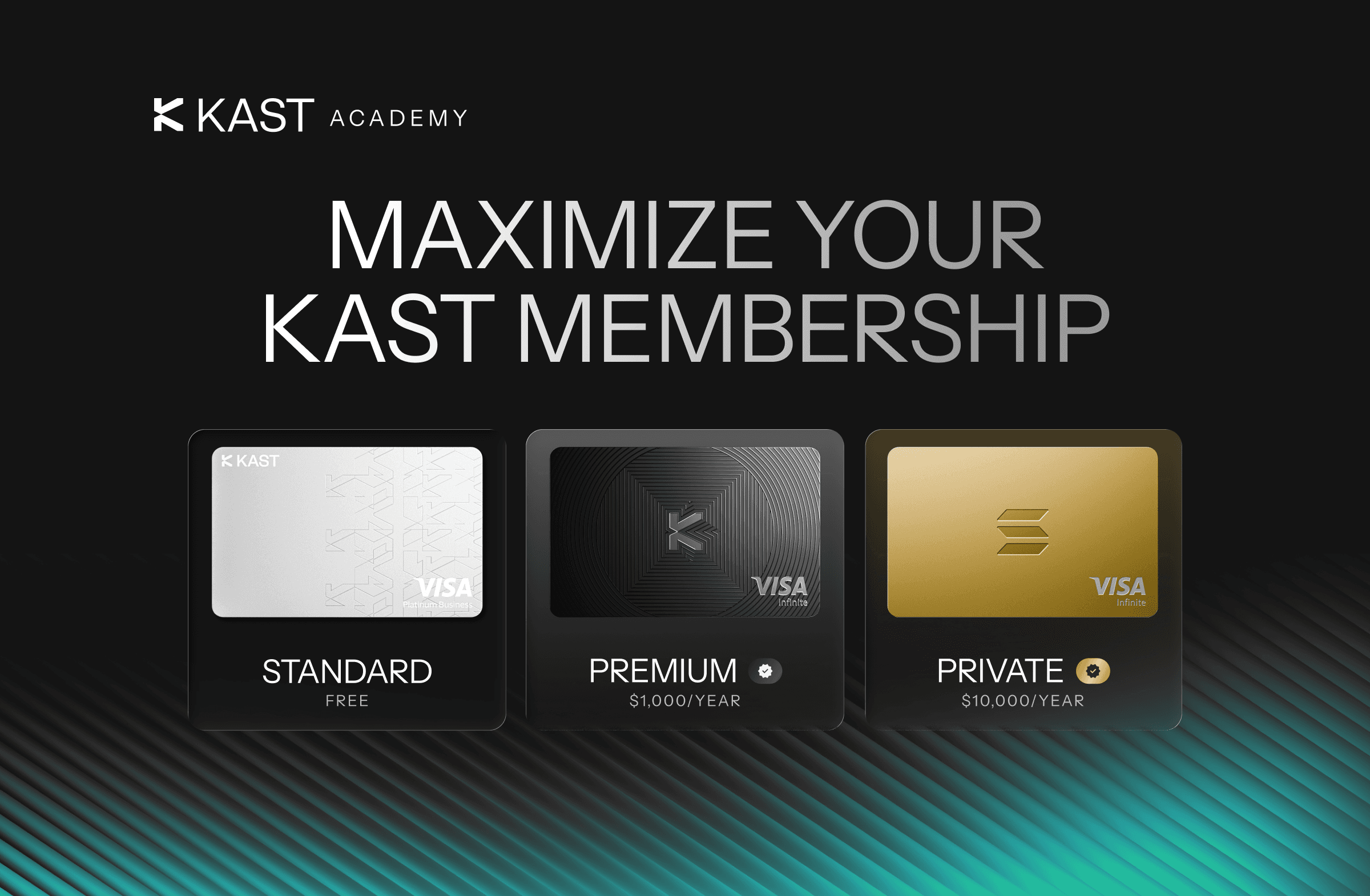
Standard (Free)
Standard is what you start with.
You pay $0. In return, you get:
- 1.5% cashback
- Access to two Standard cards (virtual or physical)
- No annual fee
If you want a physical card shipped, there’s a $40 delivery fee.
There’s a condition attached.
In some countries, if you spend $3,000 within 365 days, that $40 is refunded as cashback.
This is for trying things out. No pressure to optimize.
Premium ($1,000/Year)
Premium is where you start doing the math.
You pay $1,000 upfront. In return, you get:
- 2% cashback
- 1% in KAST points on all eligible spend
- One Premium card per year + standard edition allowance
At this point, rewards aren’t just a nice extra. You start paying attention.
Private ($10,000/Year)
Private is built for higher spend.
You pay $10,000 upfront. In return, you get:
- 3% cashback
- 2% in KAST points on all eligible spend
- Three cards per year, including a plated gold card
Membership Tiers
The tier names don’t really matter. What you’re paying for is a higher cashback ceiling, and that’s the part that drives the decision. Everything else comes after that.
Premium: When Does $1,000 Make Sense?
Let’s walk through it properly.
If you spend $10,000 per month, that gives you $2,000 per year. Subtract the $1,000 fee, and you’re at $1,000 net cashback before points.
And that’s only part of the picture. You’re also earning 1% in KAST points on all eligible spend, plus you get a Premium card included.
This only works if your spend is high enough, so where’s that line?
Example: The Break-Even Point
To break even on Premium, you need to earn $1,000 in cashback over a year.
At 2%, that means:
- $1,000 ÷ 0.02 = $50,000 in yearly spend
Break that down monthly:
- $50,000 ÷ 12 ≈ $4,167 per month
So if you’re spending around $4,167 per month on eligible purchases, you’re covering the membership fee.
Spend more than that and you’re earning net cashback. Spend less, and you’re not fully using the tier.
And on top of that, every dollar you spend continues to generate KAST points, which adds another layer of value beyond cashback.
Membership Lifecycle: Upgrades, Renewals, And Expiry
Membership is structured to stay predictable.
If you upgrade your tier, the new membership starts immediately. That means a fresh 12-month cycle begins from the moment you upgrade.
So if you move from Premium to Private partway through the year, you’ll pay for Private and start a new cycle from that point. The system shows this clearly before you confirm, so you can choose the timing that works best for you.
Renewals follow a similar approach.
Around 30 days before your membership expires, you’ll see a prompt with a few options. You can extend early and add another 12 months to your current expiry, or approve an automatic charge on the renewal date.
If you don’t take action, the membership expires at the end of the term and your account returns to Standard.
If an automatic charge doesn’t go through, there’s a 7-day grace period where your benefits stay active while the system retries. If payment still isn’t completed, the membership expires and the account moves to Standard.
What Happens To Your Card After Expiry
Your card keeps working.
No interruptions. No declined payments.
What changes is your reward rate.
If your Premium or Private membership expires, you continue using the same card, but you’re now earning Standard-level rewards. The difference shows up in what you get back, not whether the card works.
KAST Memberships: The Core Idea
Your membership tier determines your rewards.
You pay once per year, and your cashback rate and limits follow you across every card you use.
If you’re on Premium or Private, the decision comes down to one thing.
Does your spending justify the ceiling?
If yes, the tier pays for itself. If not, Standard is enough.
Disclaimer: This content is provided by KAST Academy for educational purposes only and is not intended as financial advice or a recommendation to engage in any transaction. All information is provided "as-is" and does not account for your individual financial circumstances. Digital assets involve significant risk; the value of your investments may fluctuate, and you may lose your principal. Some products mentioned may be restricted in your jurisdiction. By continuing to read, you agree that KAST group, KAST Academy, its directors, officers and employees are not liable for any investment decisions or losses resulting from the use of this information.
Related articles
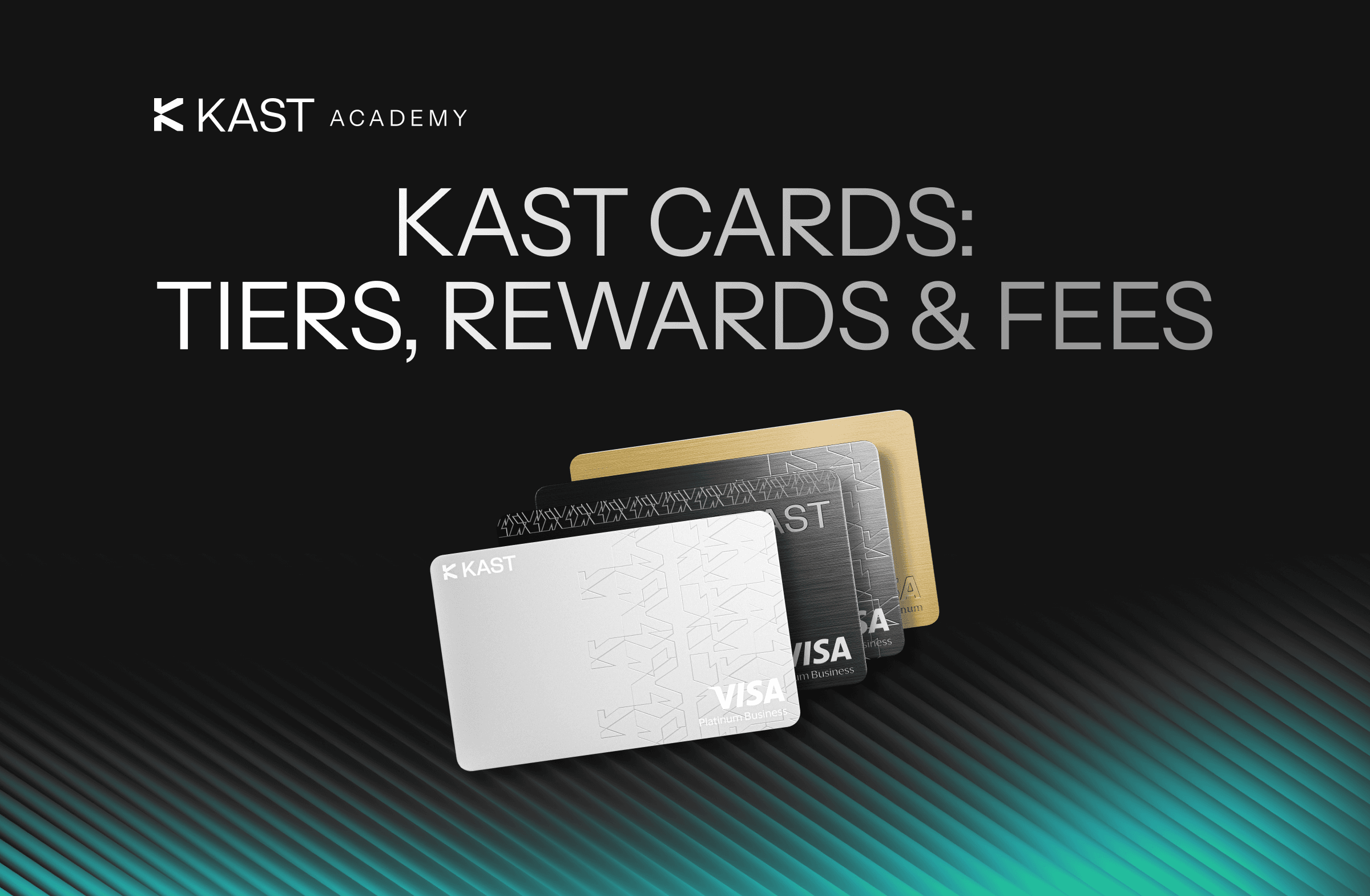
KAST Cards Explained: Tiers, Rewards, Fees, and How to Choose
KAST Cards have four tiers: Standard, Premium, Limited, and Luxe. Each changes KAST Points, SOL staking points speed, materials, and fees. Start with a virtual card in the app, then order a physical card with shipping where available.
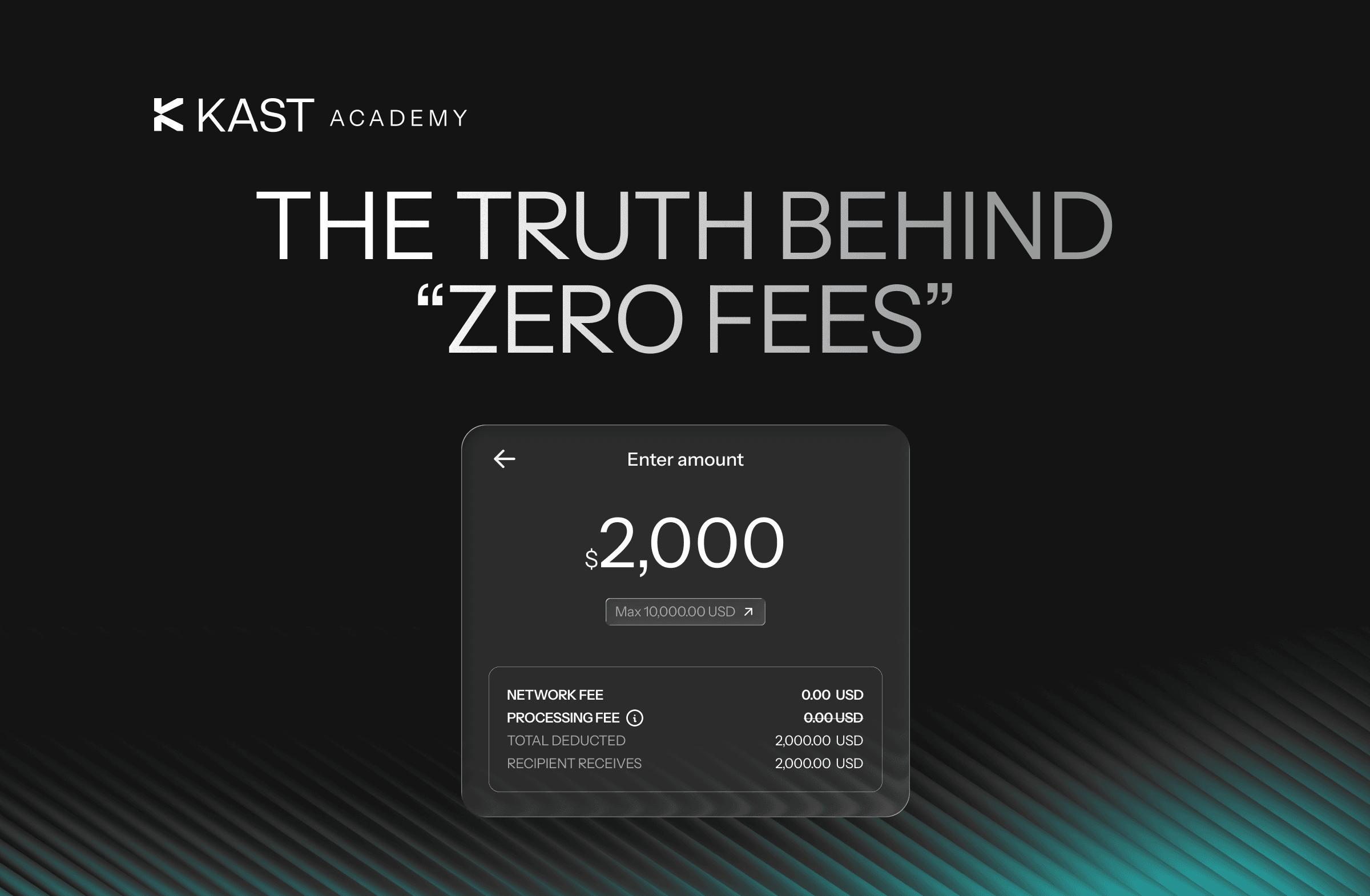
What Are “Zero Fees” in Crypto: Every KAST Fee Explained
This guide breaks down how hidden crypto fees actually work, where spreads and markups quietly reduce your payout, and how KAST shows every fee upfront so you always know what you pay and what you receive.
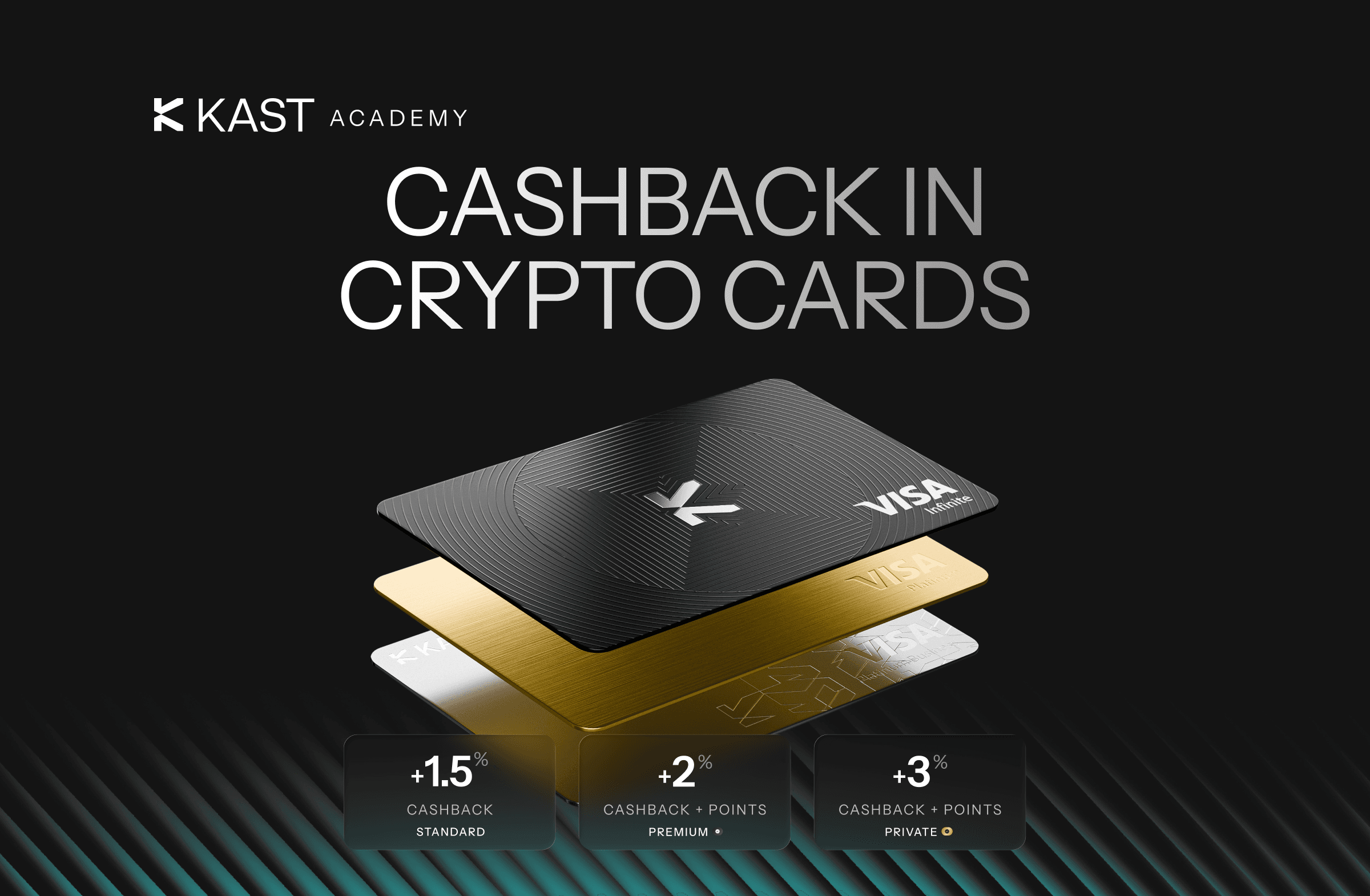
What is Cashback in Crypto Cards and How Does it Work
Crypto cashback looks simple until you realize “3% back” can mean three different things. This guide breaks down the common models and explains how KAST cashback works using a clear Locked → Redeemable → Redeemed lifecycle.