What is Cashback in Crypto Cards and How Does it Work
Crypto cashback looks simple until you realize “3% back” can mean three different things. This guide breaks down the common models and explains how KAST cashback works using a clear Locked → Redeemable → Redeemed lifecycle.
Key Takeaways
- Cashback is only “good” if you can actually earn it on your normal spending. The rate, caps, and conditions matter more than the headline number.
- Most crypto cards don’t offer simple cashback. They use caps, thresholds, categories, or promo windows that change what you actually earn.
- If you’re choosing purely on cashback, it comes down to one question: do you want predictable rewards, or are you willing to optimize for higher but conditional rates?
If you’ve used a normal credit card, cashback feels simple. You spend, you get a bit of money back, and that’s it.
Crypto cashback looks easy to understand, but it gets more complicated once you start to use it. The reward might show up as a token, a stablecoin, or just a balance inside the app.
Sometimes it’s available right away. Sometimes it takes time. Sometimes you have to redeem it yourself before it’s usable. And if you refund a purchase, the cashback can quietly disappear, which is always a fun surprise.
So people end up asking the same questions again and again.
Is this real cashback or just points? When do you actually get it? Why did it disappear after a refund? Do you need to lock funds just to get a decent rate?
All reasonable questions. Let’s go through how this works in practice, then we’ll get into how it works on KAST.
What Is Crypto Cashback?
Crypto cashback is a rewards system where you earn a percentage back when you spend, but the reward is paid in crypto or a crypto-linked balance instead of traditional cash.
That sounds straightforward, but the percentage itself is not the most important part. What actually matters is how you receive that reward. Where does it show up? What currency is it in? Can you use it immediately, or does it sit there waiting for some extra step?
Two cards can both advertise “3% cashback”, but how much and how you get it can differ a lot. One might give you something stable and spendable right away. The other might give you a token you need to convert it before you can use it.
How Crypto Cashback Cards Actually Work
Most crypto cashback cards follow a similar flow:
You pay with your card, the payment network processes it, the card program checks eligibility, your cashback is calculated, and the reward is credited to your account.
That part is fairly standard.
The differences are visible in what you actually receive and how usable it is once you have it.
Crypto cashback usually comes in a few formats:
- Major assets like BTC or ETH
- Stablecoins like USDC or USDT
- A platform token or internal points balance
Each option changes how the reward feels.
If you’re paid in BTC or ETH, the value can change after you receive it. That means the reward amount in fiat terms may end up higher or lower over time.
Stablecoin rewards are typically more predictable in fiat terms than rewards paid in volatile assets, which can make them easier to plan around for everyday spending.
Platform tokens are where things can get even more unpredictable. They often come with higher headline rates, but now you’re depending on that token having liquidity, stability, and real utility.
So when you look at cashback rates, it’s worth slowing down for a second and asking what you’re actually getting, not just how much.
The Most Common Crypto Cashback Models
Once you compare a few crypto cards, you’ll notice they’re structured in similar ways.
Some cards keep things simple with a flat percentage. You spend, and you consistently earn the same rate on eligible transactions.
This is usually the easiest model to understand. The only detail you need to watch is what the program considers “eligible”, since certain transactions won’t earn rewards.
Other cards use a tier-based system. You start with a base rate and unlock higher rates by meeting certain conditions. That might mean holding a balance, paying for a subscription, reaching a monthly spend target, or staking a token.
When it’s well-designed, this model feels predictable and fair. When it’s not, it starts to feel like the effort required to maintain your cashback rate outweighs the benefit.
Then there’s token-based cashback. This is where you’ll usually see the highest percentages advertised. The trade-off is that the reward is paid in a platform-specific token.
That means you need to think about whether you can sell it easily, whether it holds value, and whether it’s actually useful for anything beyond sitting in your account. If those answers aren’t clear, the headline rate can look better than it really is.
The Fees That Can Quietly Cancel Out Cashback
This part should get more attention than it does.
If your cashback rate is 2% and your total fees are also around 2%, you’re not really earning anything. You’re just breaking even and being told it’s a reward.
The main costs to pay attention to are conversion fees between crypto and fiat, FX fees on international spending, ATM withdrawal fees, and exchange rate markups.
Cashback only matters after all of that is accounted for. Otherwise, you’re not actually gaining anything.
What Counts as Eligible Spend
Every cashback program has rules around what qualifies for rewards.
That’s not unusual, and it’s not specific to crypto. It’s just how these programs manage risk and prevent abuse.
Most programs tend to exclude the same kinds of things: cash-equivalent transactions, certain transfers or wallet movements, and anything that looks like manufactured spend.
In practice, this is pretty easy to navigate. If you use the card the way you’d normally use a card, things tend to work as expected. Groceries, subscriptions, travel, dining. The more you stay in that lane, the more consistent your cashback experience will be.
How Cashback Works on KAST
Most crypto cashback programs are trying to solve the same problem: make rewards feel tangible.
KAST does it by making cashback behave like spendable USD inside the app, not a separate “rewards token” you have to babysit.
1) The USD Balance Model
KAST is built around a USD balance model.
You deposit supported assets, and your balance is held as USD inside the app. When you spend with the card, it draws directly from that USD balance.
So at checkout, it feels like using a regular payment card. There’s no need to choose which asset to convert before paying.
2) Instant Accrual
One of the biggest differences vs. traditional programs is timing.
KAST is designed to accrue cashback at authorization (the tap moment), though availability and redemption timing can still vary based on eligibility, country support, and risk controls.
That’s why rewards can feel immediate, while redemption can still have rules.
3) The Cashback Lifecycle
On KAST, cashback moves through three simple states.
Locked means it’s earned, but not yet redeemable. Redeemable means it’s available to redeem. Redeemed means it’s moved into your card spending account.
4) Manual Redeem, Automatic Usage
Redemption is manual by design. You tap “Redeem” in the Rewards section when you want to use your cashback.
Once redeemed, the cashback moves into your card spending account and is automatically applied with first priority on your next card purchase.
You don’t need to “select” it at checkout. It just offsets the next spend.
5) Rates Are Tier-Based
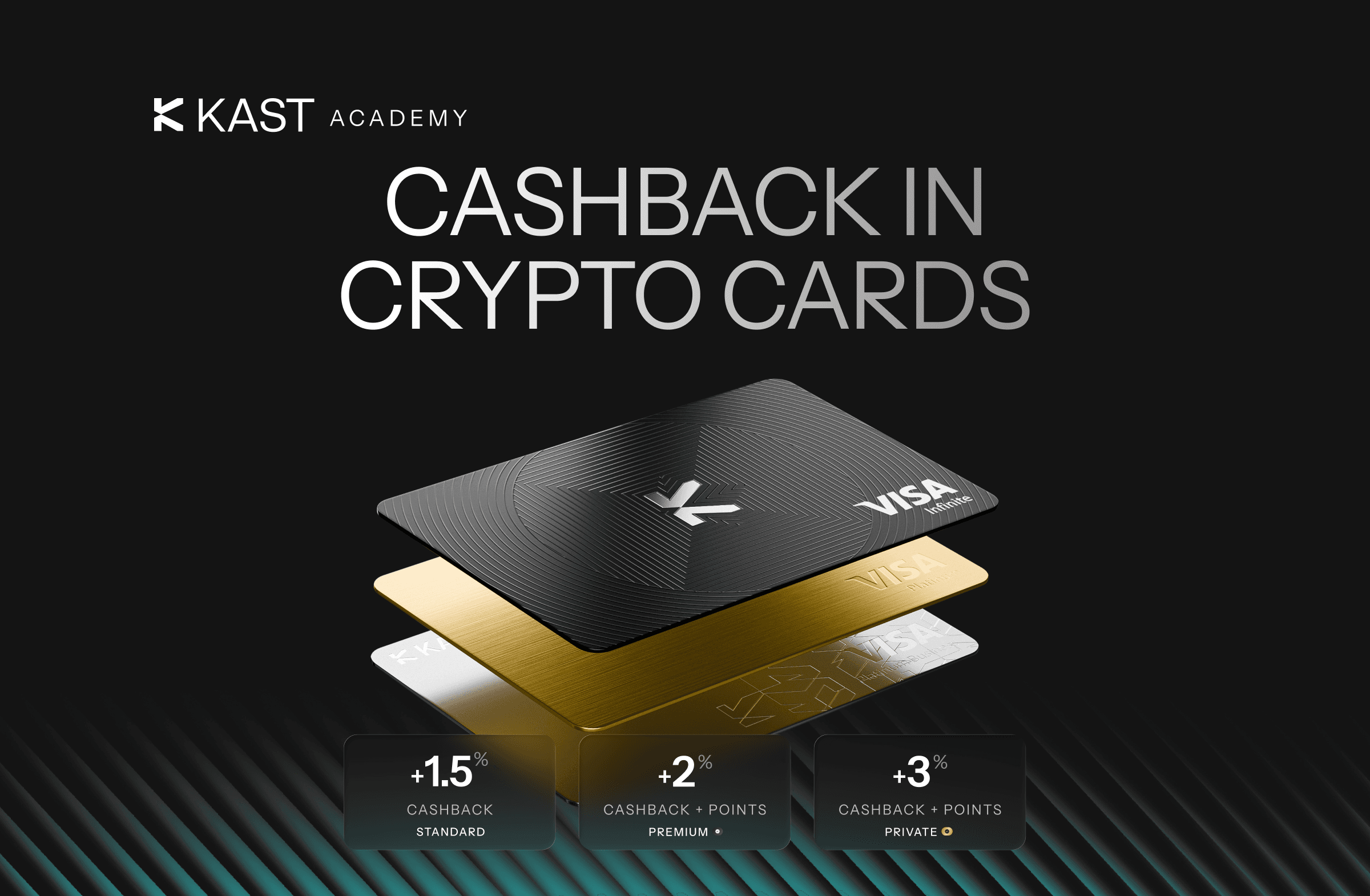
KAST cashback is tier-based. Your membership tier sets your earn rate and your monthly earning cap.
Paid tiers can also earn KAST Points as a separate balance, on top of USD cashback.
6) Refunds and reversals
If a transaction that earned cashback is later refunded or reversed, the related reward can be clawed back automatically.
KAST first removes it from your Rewards Balance (Locked/Redeemable). If there is not enough there because you already redeemed and spent it, the remaining amount can be deducted from your card spending account balance.
7) Important details to know
A few parts of the experience matter:
- Redemption availability: Cashback redemption is limited to enabled countries according to the latest country setup. Cashback has a 14-day time lock before it becomes redeemable. Some accounts may also see redemption delays because of risk controls.
- No withdrawal: Cashback cannot be withdrawn to another wallet or used as a cash-out balance. It is designed to be used inside KAST for card spending.
- No expiry: Once earned, cashback does not expire in your account.
A Simple Checklist Before You Trust Any Cashback Rate
When you come across a high cashback percentage, it’s worth taking a moment to sanity-check it.
- What asset is the reward paid in
- When the reward is actually credited
- Whether you can spend or withdraw it easily
- If there are caps, conditions, or tier requirements
- What fees apply to how you actually use the card
- What happens if you refund a transaction
If those answers are clear, the cashback is real. If they’re not, the percentage alone doesn’t tell you much.
Why Simple Cashback Wins for Everyday Use
Cashback should not require effort to understand or effort to use.
At its best, it’s something you notice without thinking too much about it. You spend, you see a reward, and that reward is easy to use the next time you pay. There’s no need to track conversions, manage multiple balances, or second-guess whether what you earned is actually usable.
The moment cashback starts to feel like something you need to manage, optimize, or work around, it stops being a benefit and starts becoming overhead. And most people don’t want another system to manage just to feel like they’re getting value from everyday spending.
That’s why the details matter more than the headline rate. A slightly lower percentage that is stable, predictable, and easy to use will usually feel better over time than a higher percentage that comes with conditions, delays, or extra steps.
In the end, the goal is simple. You should be able to use your card normally and feel like you’re getting something back without having to think too hard about how it works.
If a cashback program does that consistently, it’s doing its job. If it doesn’t, no percentage is going to fix the experience.
Disclaimer: This content is provided by KAST Academy for educational purposes only and is not intended as financial advice or a recommendation to engage in any transaction. All information is provided "as-is" and does not account for your individual financial circumstances. Digital assets involve significant risk; the value of your investments may fluctuate, and you may lose your principal. Some products mentioned may be restricted in your jurisdiction. By continuing to read, you agree that KAST group, KAST Academy, its directors, officers and employees are not liable for any investment decisions or losses resulting from the use of this information.
Related articles
What Stablecoins And Networks Are Supported By KAST?
Did you know KAST supports stablecoins like USDC, USDT, PYUSD, RLUSD and networks like Solana, Ethereum, Polygon, Tron, BSC, and more? Learn how to choose the right network based on transaction fees, speed, and compatibility.
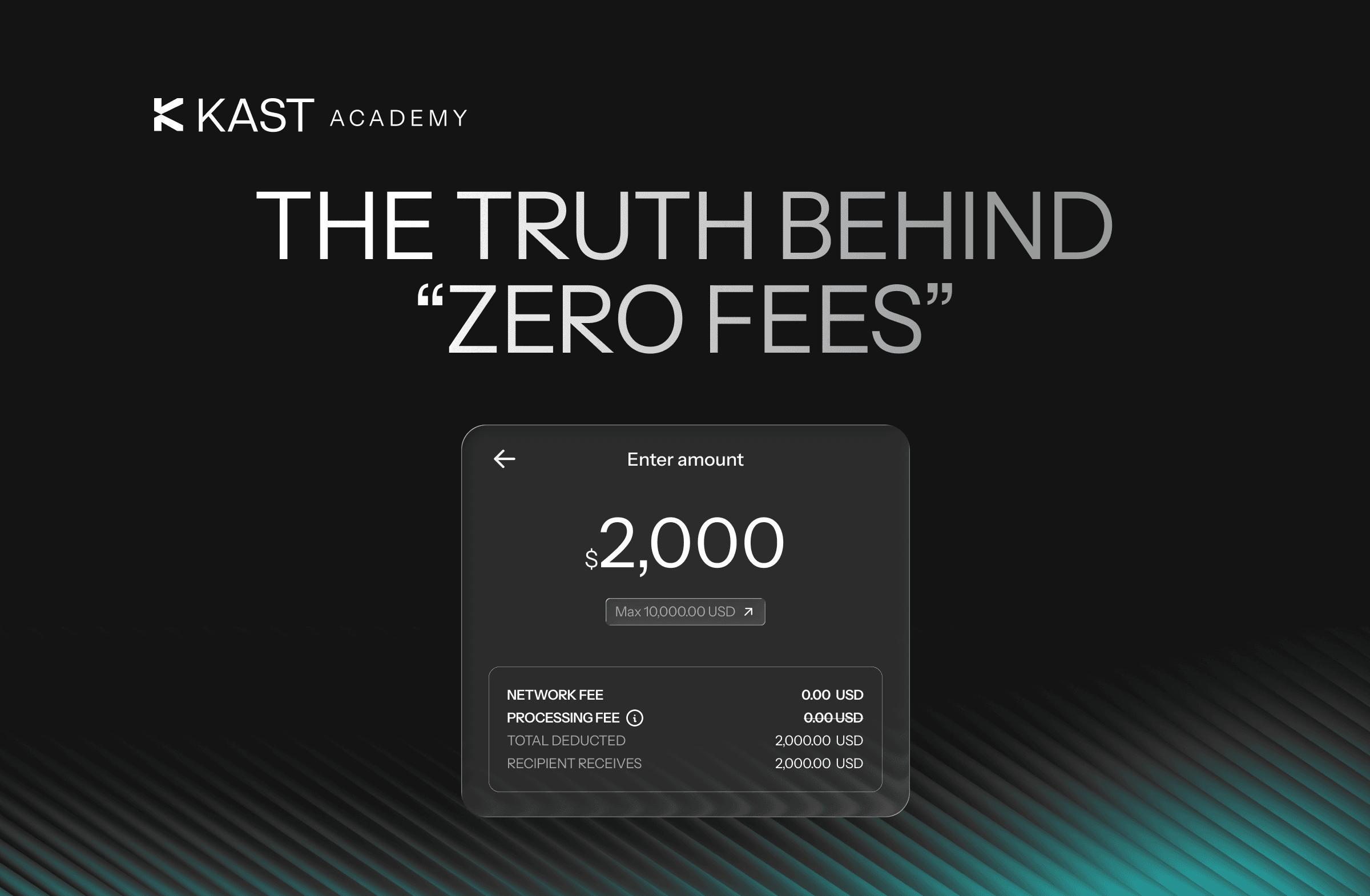
What Are “Zero Fees” in Crypto: Every KAST Fee Explained
This guide breaks down how hidden crypto fees actually work, where spreads and markups quietly reduce your payout, and how KAST shows every fee upfront so you always know what you pay and what you receive.
KAST Cards Explained: Tiers, Rewards, Fees, and How to Choose
KAST Cards have four tiers: Standard, Premium, Limited, and Luxe. Each changes KAST Points, SOL staking points speed, materials, and fees. Start with a virtual card in the app, then order a physical card with shipping where available.