What Is a Multi-Signature Wallet and How Does It Work?
A multisig wallet adds an extra layer of security by requiring multiple approvals before funds can move. Learn how multi-signature wallets work, why they’re safer, and when to use one.
Key Takeaways
- A multisig wallet requires multiple approvals to move funds, removing the single point of failure found in regular wallets.
- The “M-of-N” setup gives flexibility and security by allowing transactions only when a minimum number of keys agree.
- Multisig wallets are ideal for shared funds or added personal security, but they come with more setup complexity and slower approvals.
What is a multisig wallet? It might sound technical, but the idea is actually pretty simple. Instead of one person controlling a crypto wallet, multiple approvals are required to move funds.
Think of it like a shared vault where more than one key is needed to open it, which helps reduce the risk that a single mistake or compromised key could move funds.
In this guide, you’ll learn how multisig wallets work, why they’re considered more secure, and when it makes sense to use one. We’ll break down the concept in simple terms, walk through real-world examples, and help you decide if a multi-signature wallet is right for you.
What Is a Multi-Signature Wallet?
So, what is a multisig wallet? In simple terms, it’s a type of crypto wallet that requires more than one approval to send a transaction. Instead of relying on a single private key like a regular wallet, a multisig wallet uses multiple keys, and a set number of them must agree before funds can move.
In a standard crypto wallet, one person controls everything. If you have the private key, you can send funds. That’s simple, but it also means there’s a single point of failure. If that key is lost, stolen, or compromised, your funds are at risk.
A multisig wallet works differently. It’s based on something called an “M-of-N” setup. For example, in a 2-of-3 multisig wallet, there are three total keys, but only two are needed to approve a transaction. This means no single person has full control on their own.
Think of it like a shared bank vault. One key isn’t enough to open it. Multiple people need to agree before anything can happen. This idea of shared control is what makes multisig wallets popular for teams, businesses, and anyone who wants an extra layer of security.
How Does a Multisig Wallet Work?
So, how does multisig work in practice? It all comes down to multiple keys approving a transaction instead of just one. A multisig wallet is set up with several private keys, and a minimum number of those keys must sign off before any funds can be sent.
This is where the “M-of-N” setup comes in.
- N = total number of keys created
- M = number of approvals required
For example, in a 2-of-3 multisig wallet, there are three keys in total, but only two are needed to approve a transaction. This setup gives you flexibility. Even if one key is lost, the wallet can still function.
Step-by-Step: How a Multisig Transaction Works
Here’s a simple example of how multisig wallets work:
- A transaction is created. One of the key holders starts a transaction, such as sending crypto to another wallet.
- The transaction is shared for approval. Instead of being sent immediately, the transaction waits for other required signatures.
- Other key holders review and sign. Each authorized participant checks the details and signs the transaction with their private key.
- Required signatures are collected. Once the minimum number of approvals (M) is reached, the transaction becomes valid.
- The transaction is broadcast to the blockchain. After enough signatures are added, the transaction is finalized and sent to the network.
What’s Happening Behind the Scenes?
Technically, each signature is a cryptographic proof that a key holder approved the transaction. The wallet combines these signatures, and the blockchain verifies that the required number of valid signatures is present before accepting the transaction.
The key idea is simple:
👉 No single person can move funds alone
👉 Multiple approvals are required before anything happens
This added step is what makes multisig wallets more secure and reliable, especially for shared accounts or high-value funds.
Who Are Multisig Wallets Best For?
Multisig wallets aren’t just for experts. They’re useful for different types of users, depending on your needs:
- Businesses and teams. Businesses use multisig wallets to manage company funds more securely and transparently. Instead of one employee having full control, payments require approval from multiple team members, such as finance, operations, or leadership. This reduces the risk of internal fraud, human error, or unauthorized transactions, and creates a clear approval process for outgoing payments.
- DAOs and shared treasuries. DAOs and crypto communities often hold large amounts of funds in shared treasuries. A multisig wallet ensures that no single contributor or admin can move funds on their own. Transactions typically require approval from several trusted members, which helps protect community assets and ensures decisions are made collectively.
- Partners or joint accounts. If two or more people share ownership of funds, a multisig wallet makes sure everyone has a say. For example, business partners or co-founders can require both parties to approve transactions before money is sent. This builds trust and prevents one person from acting unilaterally.
- Individuals who want extra security. Some individuals use multisig wallets as a personal security strategy. Instead of relying on a single private key, they split keys across multiple devices, locations, or even trusted people. This way, even if one key is lost or compromised, their funds are still protected and recoverable.
In short, if you want more control, better security, and fewer single points of failure, a multisig wallet is a strong option.
Pros and Cons of Multisig Wallets
Like anything in crypto, multisig wallets come with trade-offs. They offer stronger security and shared control, but they also add a bit more complexity.
Pros
- Increased security. Multisig wallets are harder to compromise because they require multiple private keys to approve a transaction. Even if one key is exposed, an attacker still cannot access your funds without the others.
- Shared control. No single person has full authority over the wallet. This is especially useful for teams, businesses, or joint accounts where decisions should be made together.
- Reduced risk of hacks. Since transactions need multiple signatures, it’s much harder for hackers to move funds. This added layer of protection is a key reason multisig wallets are used to store large amounts of crypto.
Cons
- More complex setup. Setting up a multisig wallet takes more time than a regular wallet. You need to create multiple keys, decide how many approvals are required, and make sure each key is stored safely.
- Slower transaction approvals. Transactions don’t happen instantly with just one click. You need to wait for the required number of people or devices to approve the transaction, which can slow things down.
- Risk of losing multiple keys. While multisig protects against losing one key, losing too many keys can lock you out permanently. For example, in a 2-of-3 setup, losing two keys means you can no longer access your funds.
Popular Multisig Wallets
If you’re thinking about using a multisig wallet, there are a few well-known options that people commonly use. Each supports multi-signature setups, but they differ in design and use cases.
- Gnosis Safe is one of the most popular multisig wallets, especially on Ethereum. It’s widely used by teams, DAOs, and projects to manage shared funds. It allows you to set up flexible M-of-N configurations and supports smart contract-based wallets, which means transactions are executed through code rather than a traditional private key setup.
- Casa focuses on multisig for individuals who want extra security. It’s designed to make multisig easier to use, even if you’re not very technical. Casa helps users distribute keys across different devices and locations, reducing the risk of losing access or getting hacked.
- BitGo is commonly used by businesses and institutions. It offers multisig wallets with built-in security features and compliance tools. Many companies use BitGo to manage large amounts of crypto because it combines multisig security with enterprise-level infrastructure.
The Bottom Line
A multisig wallet gives you a simple but powerful upgrade: more than one key, more than one layer of protection. Instead of relying on a single point of control, you spread responsibility across people or devices, which makes it much harder for mistakes or attacks to cause damage.
If you’re managing shared funds, handling large amounts of crypto, or just want extra peace of mind, a multisig wallet can be a smart move. It takes a bit more setup and coordination, but in return, you get stronger security, better control, and fewer single points of failure.
Disclaimer: This content is provided by KAST Academy for educational purposes only and is not intended as financial advice or a recommendation to engage in any transaction. All information is provided "as-is" and does not account for your individual financial circumstances. Digital assets involve significant risk; the value of your investments may fluctuate, and you may lose your principal. Some products mentioned may be restricted in your jurisdiction. By continuing to read, you agree that KAST group, KAST Academy, its directors, officers and employees are not liable for any investment decisions or losses resulting from the use of this information.
Related articles
Cold Storage vs. Card Wallet: How Much Should You Keep on KAST?
Most crypto advice frames storage as a binary choice. A better approach is separating long-term holdings from a working balance. Cold storage keeps funds safe by staying out of reach, while a card wallet like KAST keeps money accessible for spending, transfers, and everyday life.
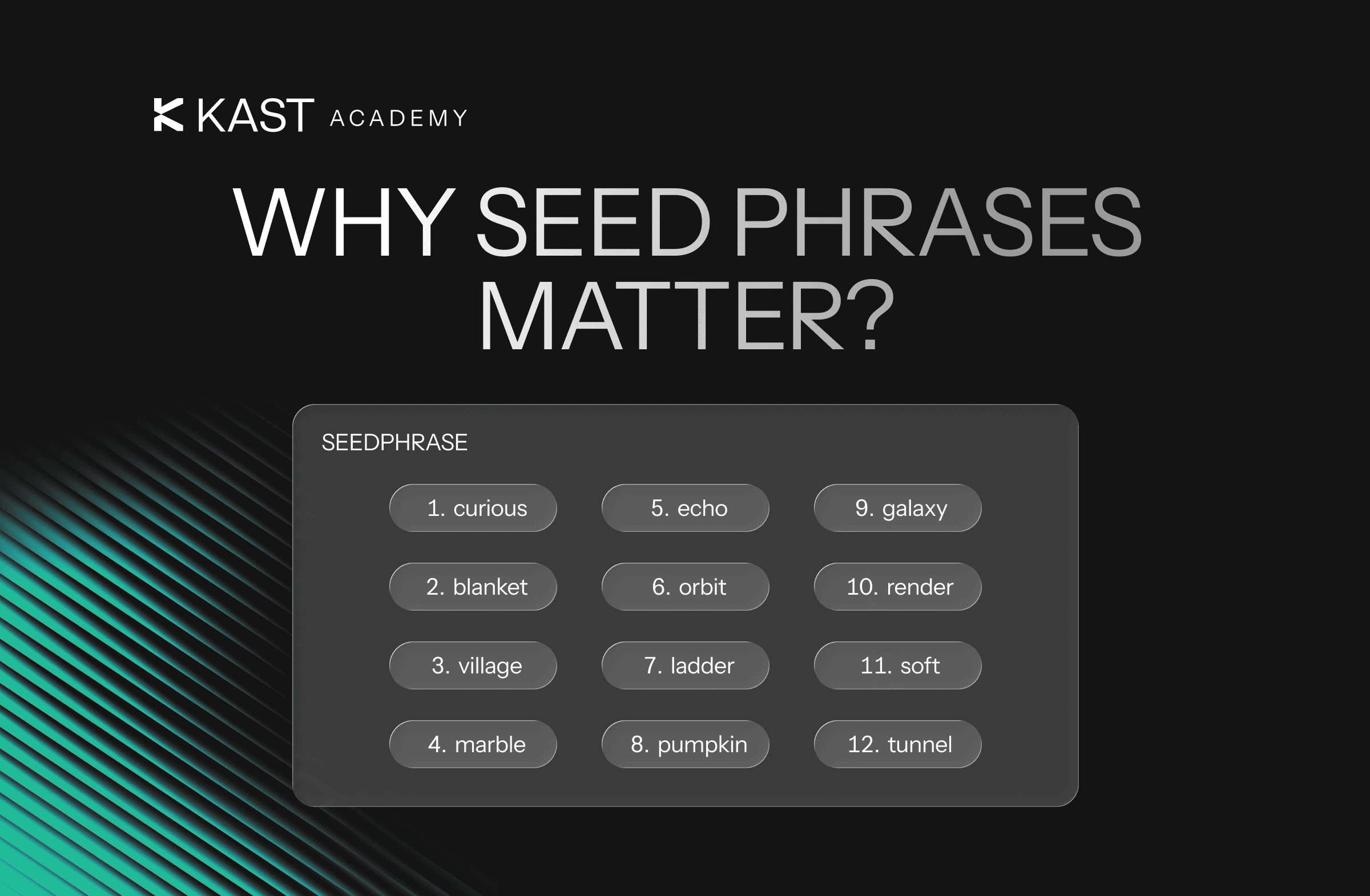
Seed Phrases Explained: Why KAST Handles the Keys for You
A seed phrase is the master backup to your crypto wallet, and losing it can mean losing access to your funds permanently. This guide explains how seed phrases work, the risks of self-custody, and why custodial models like KAST can make everyday crypto use simpler and safer.
Crypto Wallets 101: How They Work, and How to Keep Your Funds Safe
A crypto wallet doesn’t actually store your crypto, it gives you access to it. In this guide, learn how crypto wallets work, the different types available, and how to choose the right one while keeping your funds secure.