KAST vs Xapo Card: Comparison for 2026
Rewards are easy to compare on paper. Real life is funding, conversion, fees, and limits. This KAST vs Xapo breakdown focuses on how each card works once you actually start using it.
Key Takeaways
- KAST is built around a USD balance funded by stablecoins, with tier-based rewards and clearer day-to-day costs.
- Xapo is a membership-based setup with an annual fee, where rewards are paid in Bitcoin inside a bank-style ecosystem.
- Choosing between them comes down to whether you prefer a tiered structure or a fixed membership with Bitcoin rewards.
Choosing a crypto card comes down to how it works once you start using it. Rewards look good on paper, but funding, conversion, and fees are what you deal with every day.
This KAST vs XAPO comparison focuses on what that experience looks like: how you add funds, how payments go through, what you pay when spending internationally, how rewards show up, and what happens with withdrawals, ATM fees, and limits.
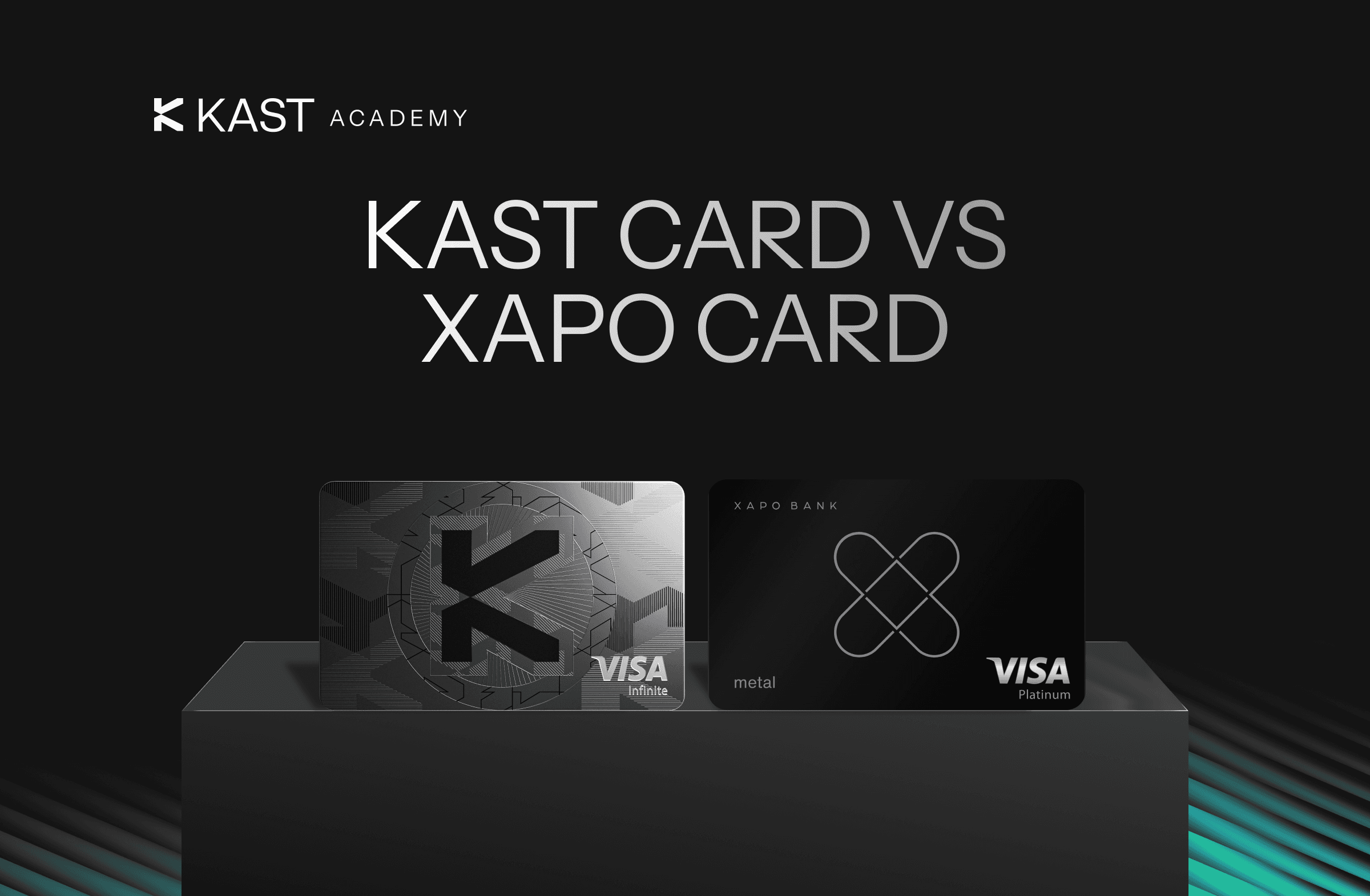
KAST vs Xapo Card
Both cards are designed for international spending, but they work differently once you start using them day to day.
KAST is built around a USD balance that you can fund through supported rails, with tier-based rewards and clearer day-to-day costs. You load it, spend it, and earn rewards based on your tier. The structure is straightforward, and the costs are visible upfront.
Xapo sits inside a bank-style ecosystem. The card comes with a $1,000 annual membership, and rewards are paid in Bitcoin (BTC). You’re paying for access first, then using the card as part of that package.
That difference becomes clear once you start using them. With KAST, the focus is on your spending and tier. With Xapo, the experience is shaped more by the membership and the wider banking setup.
What is KAST?
The KAST card has tier-based rewards and a focus on clear day-to-day costs.You fund it with stablecoins, and spending feels like using a regular card, just without the usual FX guesswork in most cases.
It runs on tiers: Standard, Premium, and Luxe. Each tier adjusts rewards and benefits, so you can start simple and upgrade if it makes sense.
The focus is clarity. You know what you’re paying, what you’re earning, and what changes when you move up a tier.

KAST Card
Card Fees
Limits
Fees
Funding Methods
Cashback + KAST Points
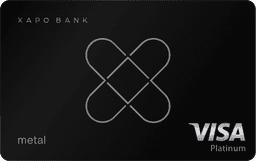
What is the Xapo Card?
The Xapo Card is tied to Xapo Bank. It comes with a single membership tier that costs around $1,000 per year.
The main hook is Bitcoin cashback, paid monthly. If you want rewards in BTC, that’s the core appeal.
It also leans into the “bank” angle. You get USD account features, regulated banking infrastructure, and a setup that feels closer to traditional finance with crypto layered in.
Xapo Card
Card Fees
Limits
Fees
Funding Methods
Rewards are distributed in BTC
KAST vs Xapo Card Comparison
Membership Costs For KAST & Xapo Card
A lot of people decide based on membership cost alone.
KAST uses tiers. You can start without committing to a large upfront cost. If you spend more, you can move up and unlock better rewards.
Xapo comes with a $1,000 annual fee upfront. The overall value depends on your spending level and how you use the account features tied to the membership.
For higher spend and Bitcoin rewards, the model can fit well. For lighter usage, the outcome depends on how much you use the included features.
Rewards: KAST Points vs Bitcoin Cashback
KAST gives you cashback in KAST Points, with a max of up to 6% depending on your tier and activity. The more you engage, the better the rate.
Xapo gives you Bitcoin cashback. You spend, and you get BTC back monthly.
If you like predictable rewards, KAST keeps things simple. If you want BTC exposure, Xapo gives you that directly, with all the ups and downs that come with it.
Deposits and Funding: Stablecoins and USD Transfers
Funding starts the same. Both KAST and Xapo support 0% stablecoin deposits, so moving USDC or USDT in is straightforward.
The difference shows up with USD bank transfers.
KAST uses mostly fixed fees for deposits, with ACH at $2 and Fedwire at $15. Withdrawals add small fixed fees plus a 0.5% FX component, currently waived in promo, while SWIFT is priced at $30 plus FX.
Xapo's fees leans more on percentage-based pricing. Deposits include a base fee plus a percentage, and withdrawals follow a similar pattern. SWIFT transfers combine a percentage fee with a fixed GBP-linked charge.
If you use stablecoins, both feel the same. With bank transfers, the difference comes down to fixed vs percentage-based fees.
ATM & Card Withdrawals and Limits
ATM fees and limits matter once you start relying on cash or making larger transactions.
Xapo offers free ATM withdrawals up to $100 per month, then charges 2% after that. It also supports higher spending limits, with a default daily cap around $10,000 and the ability to go up to $50,000, plus ATM limits up to $2,000.
KAST takes a different approach. There are no card spending limits, but ATM access is more structured, with a daily cap of $750 split across three withdrawals of $250 each. Each withdrawal carries a $3 + 2% fee.
If you mainly pay by card, both work without much friction. If you rely on ATMs or need higher limits, the differences become more noticeable.
Which One Should You Pick?
It comes down to how you spend and what you care about.
KAST fits well if you want something predictable. You load it, you spend, you earn cashback, and you’re not paying a large fee just to have the card.
Xapo makes more sense if you want Bitcoin rewards and you’re already comfortable paying for a premium banking setup. The $1,000 fee is part of the deal, not an edge case.
If your goal is simple, repeatable spending with clear rewards, KAST is easier to stick with. If you want BTC exposure and high limits, and you’re fine paying upfront, Xapo is built for that path.
Disclaimer: This content is provided by KAST Academy for educational purposes only and is not intended as financial advice or a recommendation to engage in any transaction. All information is provided "as-is" and does not account for your individual financial circumstances. Digital assets involve significant risk; the value of your investments may fluctuate, and you may lose your principal. Some products mentioned may be restricted in your jurisdiction. By continuing to read, you agree that KAST group, KAST Academy, its directors, officers and employees are not liable for any investment decisions or losses resulting from the use of this information.
Related articles
KAST vs Crypto.com Card: Complete 2026 Crypto Card Comparison
KAST and Crypto.com Visa Card both let you spend crypto, but the experience differs in how balances are funded, rewards are structured, and fees apply. This guide breaks down real-world costs, including FX, withdrawals, and tier-based benefits.
KAST Card vs Binance Card: Full Comparison for Crypto Spending
Wondering which crypto card actually fits how you spend? This KAST vs Binance Card comparison cuts through the hype to show how each card really works in day-to-day life. We break down fees, funding, rewards, and checkout experience so you can see what matters.
KAST vs EtherFi: Complete Crypto Card Comparison for 2026
KAST and EtherFi both let you spend crypto through traditional payment networks, but their structure, rewards, and fee models differ significantly. This 2026 comparison breaks down their design to help you choose the card that fits your spending style.