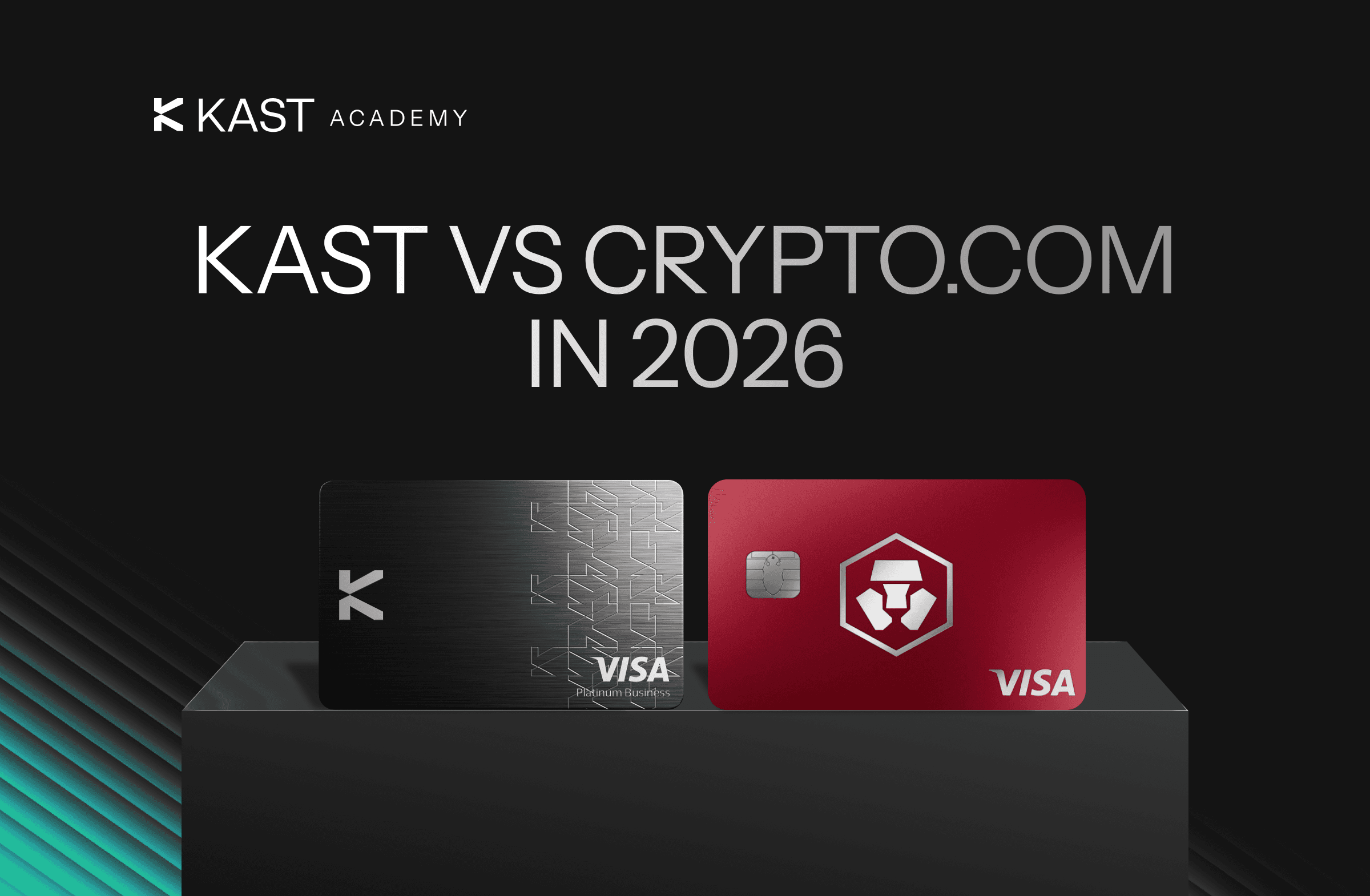
KAST vs Crypto.com Card: Complete 2026 Crypto Card Comparison
KAST and Crypto.com Visa Card both let you spend crypto, but the experience differs in how balances are funded, rewards are structured, and fees apply. This guide breaks down real-world costs, including FX, withdrawals, and tier-based benefits.
Key Takeaways
- KAST uses a USD balance funded by stablecoins, which determines your available credit limit and can improve cost predictability.
- The Crypto.com Card is a prepaid card with tier-based rewards, where benefits, cashback rates, and fees vary by tier and region.
- Differences between the crypto cards are driven more by conversion flow, funding methods, and fee structures than by card acceptance.
Choosing a crypto card depends less on advertised rewards and more on how funding, conversion, and fees work in practice.
This KAST vs Crypto.com comparison focuses on the factors that matter in real-world use: how funding works, how spending is processed, what fees apply internationally, how rewards are credited, and what withdrawals, ATM costs, and limits look like.
KAST vs Crypto.com Card
Both KAST and the Crypto.com Card let you pay at everyday merchants through major card networks. The primary difference is what happens behind the scenes and how predictable costs feel once conversion rules, tier terms, and fee schedules are applied.
KAST works as a credit card model where your deposited balance determines your credit limit. You fund your account (often with stablecoins), your balance is converted into USD, and that balance backs your available credit for spending.
Crypto.com’s card is prepaid, but rewards, limits, and benefits vary depending on the selected tier and region.
Crypto cards primarily differ in how balances are funded and when conversion occurs, which directly affects cost predictability at checkout.
What is KAST?
KAST is a stablecoin-based USD account paired with a credit card. Users deposit supported assets, which determine their credit limit, and spend using a credit line backed by that balance.
KAST uses four tiers (Standard, Premium, Limited, Luxe). The tier affects rewards and benefits, but the core spending flow remains the same.

KAST Card
Card Fees
Limits
Fees
Funding Methods
Cashback + KAST Points
What is the Crypto.com Card?
The Crypto.com card is a prepaid card. Users top it up and spend like a standard card. Rewards are paid in CRO, and the card program includes multiple tiers with different reward rates, caps, and service benefits.

Crypto.com Card
Card Fees
Limits
Fees
Funding Methods
CRO rewards
Core Structure Comparison
How Crypto Cards Work in Practice
Crypto cards typically follow one of two models:
- Pre-conversion model (convert before spending)
- On-demand conversion model (convert at checkout or top-up)
KAST follows a pre-conversion model, where funds are converted into a USD balance before spending. This can make checkout totals feel more consistent, since conversion happens before you spend.
Crypto.com uses a top-up model, where funds are converted into a card balance depending on how you fund the account and which assets you use.
Card Tiers, Pricing, and Getting Started
Both products have tiers, but the role of tiers is different.
With KAST, tiers mainly affect rewards and benefits. The spending model remains a USD balance-backed credit system.
With Crypto.com, tiers are a core part of the product. Cashback rates, caps, and benefits change depending on the selected tier.
Tier-based systems can significantly change effective rewards and costs depending on user behavior and region.
In practice, KAST may be easier to understand for users who prefer a consistent spending model. Crypto.com may vary more depending on tier and regional fee structures.
Rewards and Cashback: KAST vs Crypto.com
Rewards are often the most visible feature, but their structure determines how predictable they are in practice.
KAST rewards are tier-based and include a bonus layer, with headline rates up to a maximum of 6% depending on tier and conditions.
Reward systems tied to tokens or tiers can produce different effective returns depending on usage patterns and market conditions.
This means the headline reward rate may differ from the actual return depending on how rewards are earned, capped, and used.
Funding and Top-Ups: Deposits and Fees
Most users fund crypto cards with stablecoins, but differences appear when using bank transfers or card top-ups.
Crypto.com supports multiple funding methods, including card top-ups and bank transfers, with fees varying by method and region.
Funding method often has a larger impact on total cost than the card itself.
For users funding primarily with stablecoins, both options can be straightforward. For users relying on fiat rails, total cost depends more on the funding method than the card itself.
Stablecoins vs Fiat Funding
The way you fund your card has a direct impact on cost and usability.
Stablecoin funding:
- Often cheaper
- Faster settlement
- More predictable for crypto-native users
Fiat funding (bank or card):
- May include processing fees
- Slower in some regions
- More familiar for traditional users
Users who fund primarily with stablecoins may often experience lower total costs than those relying on fiat rails.
Card Spending Fees for KAST and Crypto.com
Card spending fees become most noticeable during international transactions or when spending in non-USD currencies.
KAST applies FX fees typically in the 0.5–1.75% range depending on currency. It has no limits on credit card spending.
Crypto.com’s FX fees vary by tier and range between 0-3%. There are limits on daily spending.
Conversion timing and FX structure directly affect how predictable costs are at checkout.
Spending from a pre-converted balance generally produces more consistent totals, while tier-based systems can introduce variability depending on setup.
Withdrawals and Off-Ramps
Withdrawals are where users most directly experience fees.
Crypto.com withdrawal costs vary by tier and region, with some thresholds offering free withdrawals.
KAST combines fixed fees and FX depending on the withdrawal method.
Withdrawal routes and fee structures often determine real costs more than advertised rewards.
ATM Fees and Limits
ATM usage highlights how fee structures translate into real-world behavior.
KAST applies a $3 + 2% fee per withdrawal and daily limits of $750.
Crypto.com ATM fees and limits vary by tier and region.
ATM limits and fee structures can significantly affect usability for users who rely on cash withdrawals.
Pros and Cons: KAST vs Crypto.com
KAST focuses on a pre-converted USD spending flow, while Crypto.com may offer more fiat funding options and broader ecosystem features, depending on region and tier.
KAST Pros
- KAST uses a pre-converted USD balance to back your credit limit, so transaction costs are easier to predict at checkout.
- KAST can offer higher potential cashback rates than most tier-based crypto cards, depending on the selected tier and bonus conditions.
- KAST does not charge card top-up fees and supports higher spending limits, making it easier to use for frequent or larger transactions.
KAST Cons
- KAST is designed around a USD spending balance, so all spending happens after conversion rather than directly from the original asset.
- KAST’s model is centered on payments, with fewer additional features compared to platforms that bundle exchange and staking services.
- Fees such as FX and withdrawals depend on the network and method used, which can affect total cost depending on how funds are moved.
Crypto.com Pros
- In many regions, Crypto.com offers lower-cost deposits and withdrawals, especially when using supported fiat rails.
- Crypto.com combines card usage with a broader ecosystem, including exchange access, staking, and app-based features.
- Crypto.com supports multiple funding methods, including fiat and crypto top-ups, which gives users flexibility depending on how they manage funds.
Crypto.com Cons
- Crypto.com uses a tier-based system where rewards, limits, and fees change depending on the selected tier and region.
- Crypto.com rewards are paid in CRO, so the actual value of rewards can change with market conditions.
- Fee structures and limits vary in practice, which can make total costs less predictable depending on how the card is used.
KAST vs Crypto.com: Which Should You Choose?
The choice depends on how the card is used.
KAST may be more suitable for users who prefer a predictable USD-denominated balance and consistent spending behavior. There are no card spending limits and no card top-up fees.
Crypto.com may be more suitable for users who want CRO-based rewards and are comfortable with tier-based benefits and regional differences. Withdrawal costs may be lower for users living in the U.S.
The most important factors when choosing a crypto card are cost predictability, funding method, and reward structure.
Disclaimer: This content is provided by KAST Academy for educational purposes only and is not intended as financial advice or a recommendation to engage in any transaction. All information is provided "as-is" and does not account for your individual financial circumstances. Digital assets involve significant risk; the value of your investments may fluctuate, and you may lose your principal. Some products mentioned may be restricted in your jurisdiction. By continuing to read, you agree that KAST group, KAST Academy, its directors, officers and employees are not liable for any investment decisions or losses resulting from the use of this information.
Related articles
KAST vs EtherFi: Complete Crypto Card Comparison for 2026
KAST and EtherFi both let you spend crypto through traditional payment networks, but their structure, rewards, and fee models differ significantly. This 2026 comparison breaks down their design to help you choose the card that fits your spending style.
KAST vs RedotPay: Which Crypto Card Is Better for Everyday Spending?
A clear comparison of KAST vs RedotPay. See fees, cashback, limits, and real-world costs to choose the right crypto card for your spending.
KAST vs Bitget Card: How the Two Crypto Cards Compare in 2026
Choosing a crypto card is not just about where it is accepted. It is about how your balance is handled before you tap, and when your fees show up. This comparison breaks down KAST vs Bitget Card in 2026, focusing on per-purchase costs, FX charges, spending limits, and ATM rules.