Fees, Speed, and Settlement: Layer 1 vs Layer 2 for Stablecoins
Choosing what network to use isn’t a cosmetic choice. It changes fees, settlement, and how your stablecoin transfer behaves. This guide breaks down Layer 1 vs Layer 2 , explains why costs and speed can vary, and shows how to choose a network without making avoidable mistakes.
Key Takeaways
- Layer 1 is the base chain where transactions ultimately settle, which usually means fewer moving parts.
- Layer 2 is a scaling layer that batches activity to reduce costs, but adds extra systems and assumptions.
- In KAST, network choice mainly affects how your funds arrive, since deposits are credited in USD once received.
You’ve probably seen this in a wallet or exchange dropdown:
“Send on Ethereum.”
“Send on Arbitrum.”
“Send on Solana.”
At first glance, it looks like a simple selection. Just pick a network and move on.
But if you’ve ever hesitated before clicking, that instinct is correct.
Because you’re not just choosing where your stablecoin goes. You’re choosing the rail it moves on.
And that rail changes two things you’ll feel immediately: how much you pay in fees, and how long the transfer takes to show up.
This is the practical difference between Layer 1 and Layer 2 blockchains.
If you’re using KAST, this choice shows up immediately. You pick a network before sending funds in, and that decision determines your fees and timing before the funds even reach your balance.
So it’s worth understanding what’s actually happening under the surface.
Let’s break it down. First the definitions, then the parts that tend to matter in practice.
What Is A Layer 1 Blockchain?
A Layer 1 (L1) blockchain is the base network. It runs its own consensus and records the official ledger.
It validates transactions and produces blocks.
Common Layer 1s include Bitcoin, Ethereum, and Solana.
When you send funds on a Layer 1, that’s where the transaction actually settles. No extra layer required.
Now here’s where things get slightly frustrating.
Layer 1s are balancing security, decentralization, and scale. When demand spikes, the chain doesn’t magically stretch to fit everyone at once.
Instead, you usually see one of two things: fees go up, or transactions take longer to confirm. That’s not a “bug.” It’s the cost of keeping a widely shared ledger secure.
What Is A Layer 2 Blockchain?
A Layer 2 (L2) blockchain sits on top of a Layer 1 blockchain.
It doesn’t replace it, but works alongside it.
The goal is straightforward:
- process more transactions,
- reduce the cost per transaction,
- and still rely on Layer 1 for final settlement.
So instead of every transaction happening directly on Layer 1, some of that activity gets handled elsewhere first.
It’s a system that processes transactions elsewhere first, then settles the result back to Layer 1.
That’s where the scaling comes from.
Most Layer 2s inherit security from the Layer 1 they settle to, but they also introduce additional components, like sequencers and proof systems. That means more moving parts, and more things you need to understand when you move assets around.
While they are not as simple to use, Layer 2s help address the blockchain trilemma by offloading activity from the base layer.
Common approaches include rollups, state channels, and sidechains.
Layer 1 Vs Layer 2 Blockchain: Main Differences
Here’s the clean mental model:
- Layer 1 = where it settles.
- Layer 2 = how it scales.
Layer 2 doesn’t replace Layer 1.
It exists because Layer 1 has limits.
A Real Example: Ethereum’s Dencun Upgrade
A good example of this tradeoff is Ethereum’s Dencun upgrade.
The goal of Dencun was clear: make Layer 2 transactions cheaper by introducing a new way to store data (often referred to as “blobs”). That reduced the cost for rollups to post data to Ethereum, which in turn lowered fees for users on Layer 2 networks.
So yes, for many users, Layer 2 fees dropped after Dencun. That’s the point of these scaling upgrades.
But here’s the part people didn’t fully expect.
Because more activity shifted away from Layer 1, fewer fees were being paid directly on the Ethereum mainnet. And since those fees are what get burned (reducing supply), the result was a change in Ethereum’s monetary dynamics.
Since the upgrade, Ethereum has become inflationary again because not enough fees were being burned on Layer 1.
So yes, Layer 2 scaling made transactions cheaper.
It also changed how value flows through the system.
That’s the pattern you’ll see often: improvements in one area introduce tradeoffs somewhere else.
Common Layer 1 Vs Layer 2 Misconceptions
This is where people usually learn the hard way.
“Layer 2 Is Always Cheaper.”
It often looks cheaper.
You see a lower fee. You click.
Then later you need to bridge, withdraw, or move assets elsewhere.
That’s when costs start stacking.
Often cheaper per transaction, yes. But not always cheaper end-to-end. If you later need to bridge, withdraw, or unwind a workflow across chains, the “cheap” path can get expensive in total.
“Layer 2 Is A Different Kind Of Asset.”
It’s not.
Your wallet address can be the same across Ethereum Layer 1 and a Layer 2 like Arbitrum.
But your assets don’t automatically follow you.
You still need to bridge them.
And that’s where errors happen. Wrong network. Wrong destination.
Fixable, usually. Still frustrating.
“Stablecoins Are Stable, So The Network Doesn’t Matter.”
This one is common.
The price is stable. The experience isn’t.
Sending USDC on Solana vs ERC-20 USDC gives you completely different fees and speeds.
Same stablecoin. Different outcome.
“Layer 1 Blockchains Are Slow.”
Some are.
Others are not.
For example, Solana is a Layer 1 designed for fast settlement and low fees.
So the idea that Layer 1 is always slow doesn’t hold up.
Where Stablecoins Fit In
Stablecoins exist on networks, not in isolation.
That means:
- the same stablecoin can exist on multiple Layer 1 blockchains,
- it can be bridged into Layer 2 environments,
- and you can have multiple versions of what looks like the same asset.
You’ve seen it:
- USDC (Ethereum)
- USDC (Solana)
- USDC (Arbitrum)
That selection isn’t just about the asset.
It’s about the rail.
And that choice determines whether the transfer is cheap, fast, compatible, or slightly annoying.
Stablecoin Payments: Layer 1 Vs Layer 2
There isn’t a single answer here.
Only tradeoffs.
Why Layer 1 Can Feel Simpler
With Layer 1, there are fewer moving parts.
Fewer bridges. Fewer steps. Fewer situations where you have to double-check what happens next.
You send. It settles.
That simplicity matters, especially when you’re moving funds regularly.
Why Layer 2 Still Matters
Because Layer 1 fees don’t stay stable.
When they increase, Layer 2 becomes useful.
It gives you lower per-transaction costs and access to ecosystems built around those networks.
If you need that environment, Layer 2 isn’t optional.
How To Actually Decide
You don’t need a complex framework.
If you want simplicity and fewer steps, Layer 1 usually feels cleaner.
If you want lower fees inside a specific ecosystem, especially Ethereum-based apps, Layer 2 can make more sense.
The key is matching the network to where the funds are going.
Not what sounds better in theory.
What Stablecoins And Networks Are Supported By KAST?
This is what actually affects your day-to-day usage.
KAST supports multiple stablecoins and networks so you can choose based on cost, speed, and destination.
Stablecoins Supported By KAST
KAST supports USDC, USDT, PYUSD, USDe and RLUSD.
Networks Supported By KAST (Examples)
Supported networks include:
Solana, Ethereum, Polygon, Tron, Binance Smart Chain (BSC), Avalanche C-Chain, Arbitrum, and TON
Some are Layer 1. Some are Layer 2.
That mix gives you flexibility, but it also means you need to pay attention when choosing.
Are Stablecoins Used On Layer 1 Or Layer 2 In KAST?
Both.
From your perspective, what matters is what changes when you switch:
- fees,
- speed,
- compatibility.
Once funds arrive in KAST, they are converted to USD.
So your network choice only affects how the funds arrive, not how you use them afterward.
Stablecoins You Can Send and Receive With KAST
Stablecoins You Can Send With KAST
Stablecoins You Can Receive With KAST
Choosing The Right Network Without Overthinking It
A Layer 1 is where transactions ultimately settle.
A Layer 2 is a scaling system designed to reduce costs by batching activity and settling back to Layer 1.
That difference matters because it changes how your transfer behaves.
So when you see “Send on Ethereum” vs “Send on Arbitrum,” don’t treat it like a cosmetic option.
Treat it like what it is:
A choice of rails.
Disclaimer: This content is provided by KAST Academy for educational purposes only and is not intended as financial advice or a recommendation to engage in any transaction. All information is provided "as-is" and does not account for your individual financial circumstances. Digital assets involve significant risk; the value of your investments may fluctuate, and you may lose your principal. Some products mentioned may be restricted in your jurisdiction. By continuing to read, you agree that KAST group, KAST Academy, its directors, officers and employees are not liable for any investment decisions or losses resulting from the use of this information.
Related articles
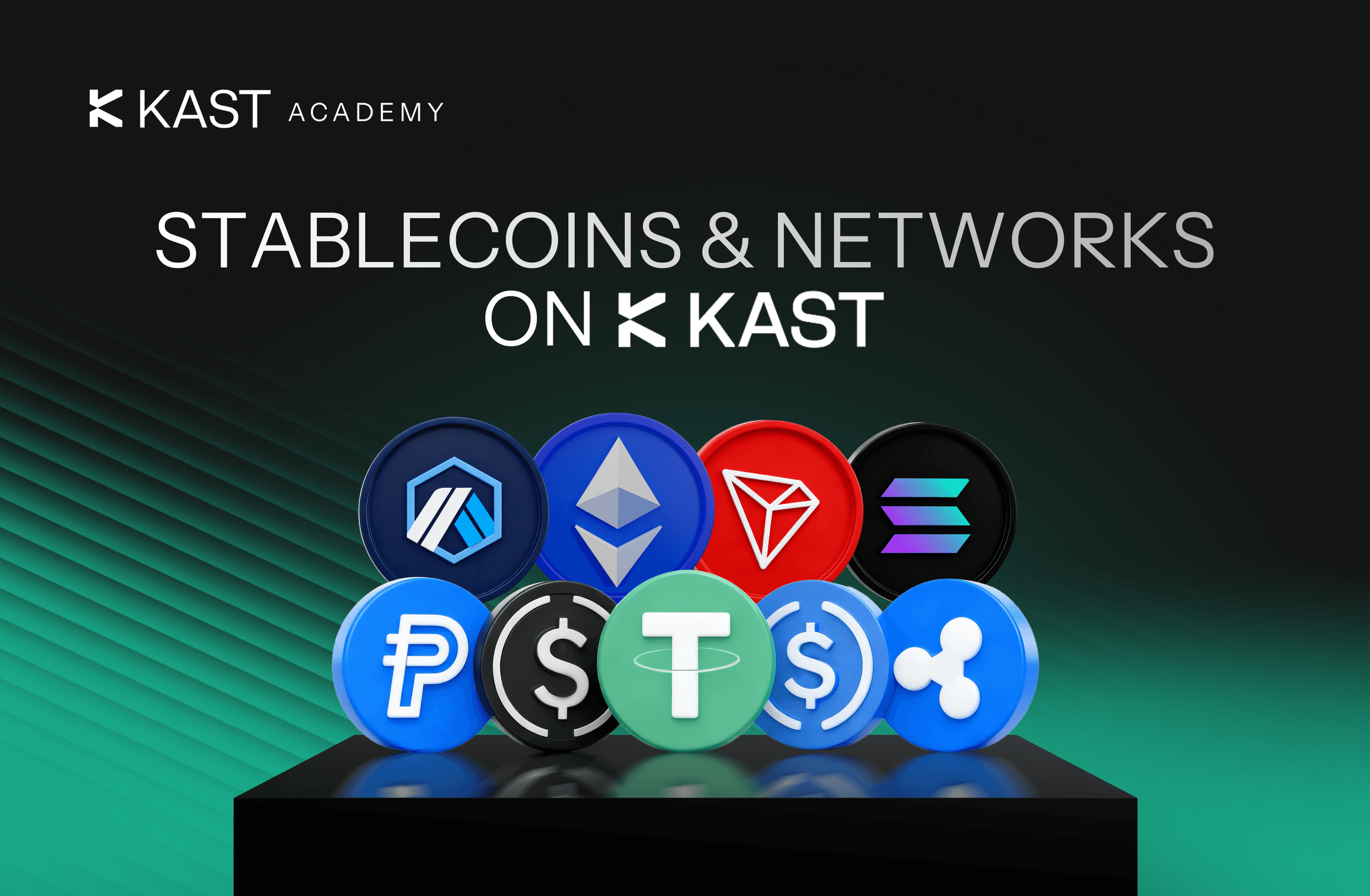
What Stablecoins And Networks Are Supported By KAST?
Did you know KAST supports stablecoins like USDC, USDT, PYUSD, RLUSD and networks like Solana, Ethereum, Polygon, Tron, BSC, and more? Learn how to choose the right network based on transaction fees, speed, and compatibility.
USDC on Solana vs USDC on Ethereum (ERC-20): Key Differences Explained
USDC exists on multiple networks, including Ethereum (ERC-20) and Solana. While it’s the same stablecoin, network choice affects fees, speed, and compatibility. Here’s what changes and how to choose the right USDC network for your transfer.
How Solana Cards Work: A Beginner's Guide
What a Solana card actually does, how payments work, and the Solana card options KAST offers for spending crypto like a normal card.